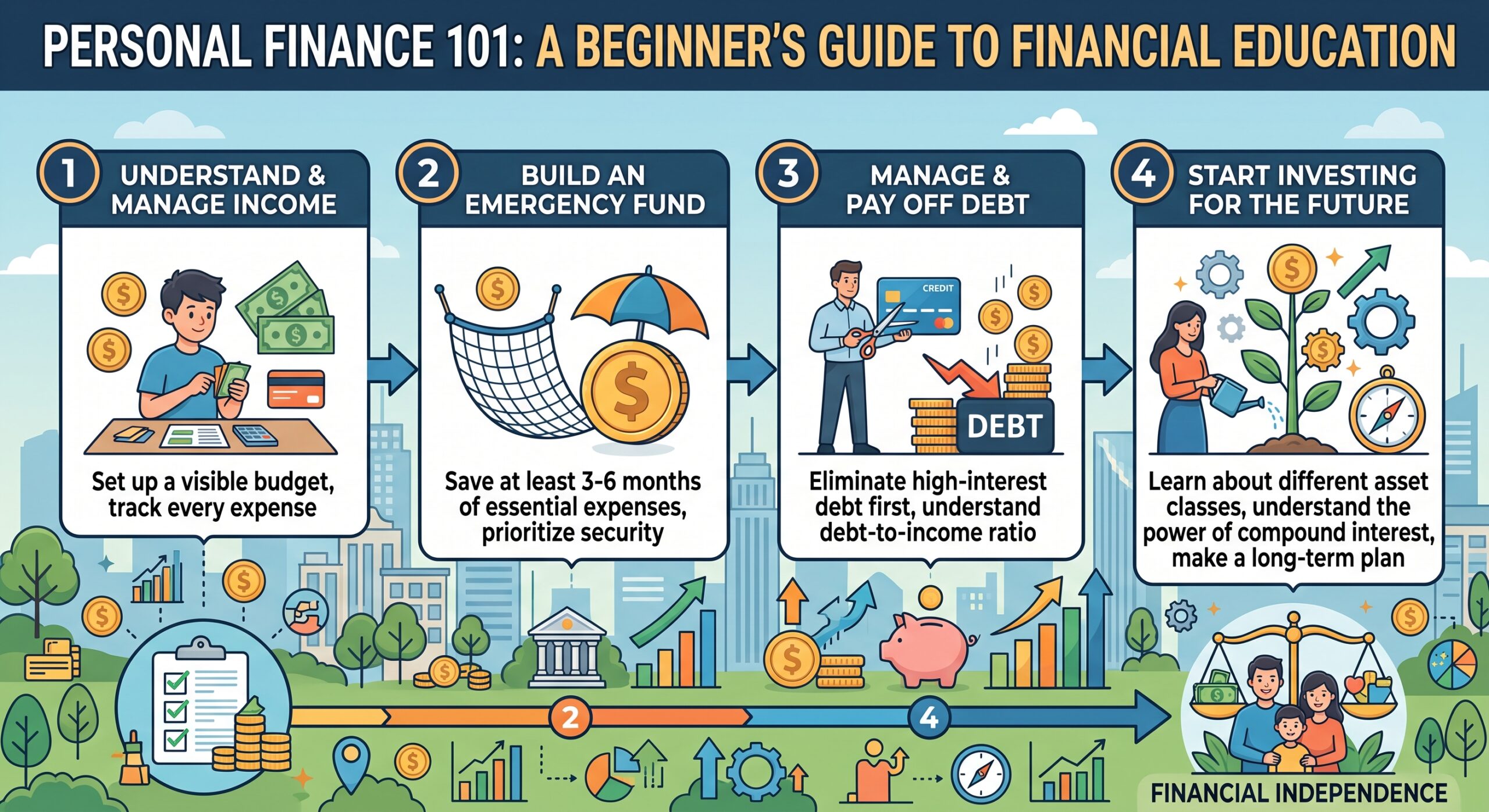

Taking control of your finances is one of the most empowering choices you can make. Managing money isn’t just about cutting back on coffee or obsessing over spreadsheets; it is about creating freedom, stability, and peace of mind.
Whether you are starting your first full-time job, trying to pay off student debt, or simply wanting to save for future milestones, mastering fundamental money management skills will set you on the right path. Here are the essential financial education tips every beginner needs to know.
1. Track Your Cash Flow to Understand Spending
Before you can build a realistic plan, you must know where your money is actually going each month. Many people feel perpetually broke despite earning a steady income because small, unmonitored expenses quietly erode their bank accounts.
- Conduct a 30-Day Audit: Review your bank and credit card statements over the past month. Categorize every expense into fixed costs (rent, utilities, insurance) and variable costs (groceries, dining out, subscriptions).
- Distinguish Needs vs. Wants: A “need” covers basic survival and obligations (housing, food, healthcare), whereas a “want” covers non-essential lifestyle choices (streaming services, premium coffee, entertainment). Identifying this boundary gives you direct control over your cash flow.
2. Adopt a Simple Budgeting Framework
Budgeting shouldn’t feel like a punishment; it is simply a tool that gives every dollar a specific job. A popular, beginner-friendly framework is the 50/30/20 Rule.
| Category | Target Share | Examples |
| Needs | 50% of Net Income | Rent/mortgage, basic groceries, utilities, minimum debt payments |
| Wants | 30% of Net Income | Dining out, hobbies, travel, entertainment, non-essential shopping |
| Savings & Growth | 20% of Net Income | Emergency fund, retirement accounts, investments, extra debt payoff |
If soaring housing or utility costs make 50% for needs unrealistic in your current area, adapt the framework into a 60/20/20 plan (60% living expenses, 20% wants, 20% savings). The goal is consistency over perfection.
3. Build an Emergency Fund First
Life is unpredictable, and unexpected costs—like car repairs, medical bills, or job transitions—can quickly push you into high-interest debt if you don’t have a buffer.
- Start Small: Aim for an initial starter goal of $1,000. This covers most minor surprises without forcing you to use credit cards.
- Scale to 3–6 Months: Once debt is manageable, expand your buffer to cover 3 to 6 months of essential living expenses.
- Use a High-Yield Savings Account (HYSA): Keep your emergency reserve in an accessible, FDIC-insured HYSA. This keeps the money liquid while earning significantly higher interest than a standard checking account.
4. Tackle High-Interest Debt Aggressively
Not all debt is created equal. While low-interest debt (like standard student loans or low-rate mortgages) can be managed over time, high-interest credit card debt acts as a major drain on your long-term wealth building.
Choose one of two proven strategies to eliminate high-interest balances:
The Debt Avalanche Method
Pay off debts in order of highest interest rate first, regardless of the balance size. This mathematically minimizes the total interest you pay over time.
The Debt Snowball Method
Pay off debts starting with the smallest balance first, regardless of interest rate. Getting quick “wins” as small accounts hit zero creates powerful psychological momentum to keep going.
5. Put Compound Interest to Work Early
Saving money protects you today, but investing grows your money for tomorrow. Thanks to compound interest—where your returns earn returns of their own—starting early makes a huge difference over a multi-decade horizon.
- Claim Employer Matching Funds: If your workplace offers a 401(k) or pension match, contribute at least enough to capture the full match. It is essentially free money and an instant 100% return on those dollars.
- Start with Low-Cost Index Funds: You don’t need to pick individual stocks. Broad-market index funds (such as those tracking the S&P 500 or Total World Stock Market) give you instant diversification across hundreds of companies at low expense ratios.
- Automate Everything: Set up automatic monthly transfers from your checking account straight into your savings and investment accounts on payday. When saving happens automatically, you eliminate the temptation to spend those funds.
6. Avoid Common Beginner Money Pitfalls
Building financial security requires managing mindsets and daily habits just as much as technical numbers:
- Lifestyle Creep: As your earnings increase, resist the urge to immediately upgrade your lifestyle at the same rate. Divert a large portion of pay raises directly into savings and investments.
- Ignoring Credit Health: Monitor your credit score regularly. A strong credit profile lowers interest rates on future car loans, mortgages, and insurance policies.
- Chasing Get-Rich-Quick Schemes: Sustainable wealth creation is a gradual process. Be cautious of high-risk speculative trends or promises of overnight success.
Final Thoughts
Financial education is not a single milestone—it is a continuous habit. Start with one achievable step today, such as tracking your last 30 days of spending or opening a dedicated savings account. Small, consistent choices compounded over time create lasting financial confidence and long-term security.