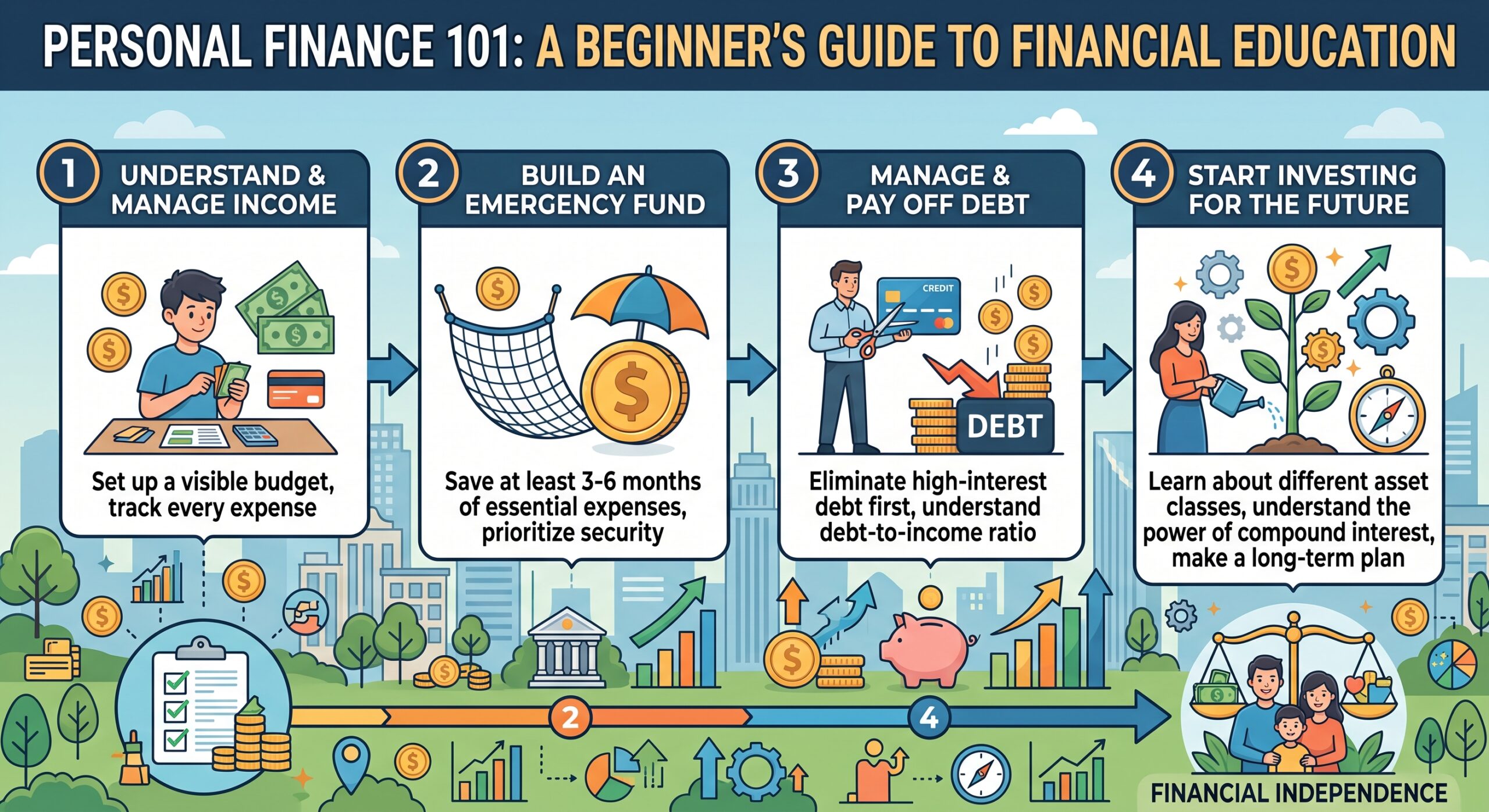

Building lasting wealth for a family requires a deliberate shift from short-term money management to long-term financial architecture. While personal investing often focuses on individual risk tolerance and rapid growth, family wealth management must balance capital appreciation, capital preservation, risk mitigation, and multi-generational impact.
A successful family financial strategy does not rely on speculative stock picking or short-term trends. Instead, it relies on structured systems, disciplined asset allocation, tax efficiency, and early financial education.
1. Establishing the Foundation: Financial Resilience
Before allocating capital toward market-based investments, a family must secure its core financial baseline. Investing without a stable foundation increases the likelihood of being forced to liquidate assets during market downturns to cover unexpected expenses.
Eliminating High-Interest Debt
High-interest debt—particularly credit card balances and high-rate personal loans—compounds against wealth creation at rates faster than traditional market returns. Prioritizing the liquidation of toxic debt provides a guaranteed, tax-free return equal to the interest rate avoided.
Building a Dynamic Emergency Reserve
Traditional financial advice recommends saving 3 to 6 months of living expenses. However, for families with dependent children, real estate commitments, or single-income households, extending this buffer to 6 to 12 months in a high-yield savings account or short-term liquid instrument provides necessary stability.
Comprehensive Risk Management
Wealth preservation relies heavily on insurance coverage. A robust family strategy should incorporate:
- Term Life Insurance: To protect against the loss of a primary income earner.
- Disability Insurance: Protecting income generation potential during prolonged illness or injury.
- Umbrella Liability Insurance: An affordable layer of protection against unexpected lawsuits or liabilities.
2. Core Investment Vehicles for Families
Once financial stability is established, families can deploy capital across core asset classes designed to generate compound growth while managing volatility.
The Power of Compounding: Capital left to compound at a moderate annual growth rate doubles roughly every 7 to 10 years (governed by the Rule of 72). Starting early reduces the raw amount of capital required to hit long-term goals.
Equity Market Participation
Broad-market index funds and Exchange-Traded Funds (ETFs) remain the most effective vehicle for long-term wealth creation. Rather than attempting market timing, families benefit from low-cost, passive strategies tracking major indices (such as the S&P 500 or MSCI World).
Key advantages include:
- Instant Diversification: Spreading risk across hundreds of market leaders.
- Low Expense Ratios: Minimizing management fees that erode long-term gains.
- Dollar-Cost Averaging (DCA): Systematically investing fixed sums at set intervals reduces emotional decision-making and smooths out purchase costs across market cycles.
Real Estate and Tangible Assets
Physical real estate offers inflation protection, equity appreciation, and potential rental income. Beyond primary residence ownership, families can explore real estate investment trusts (REITs) or residential rental properties as income-generating assets.
3. Tax-Advantaged Accounts and Education Funding
Maximizing tax efficiency allows a family to retain a significantly higher proportion of compound returns over a multi-decade horizon.
       ┌────────────────────────────────────────────────────────┐
       │               FAMILY CAPITAL ALLOCATION               │
       └───────────────────────────┬────────────────────────────┘
                                   │
         ┌─────────────────────────┴─────────────────────────┐
         ▼                                                   ▼
┌──────────────────┐                               ┌──────────────────┐
│ Retirement Plans │                               │ Family Education │
│ (401k, IRA/Roth) │                               │  (529, UTMA/UGMA)│
└──────────────────┘                               └──────────────────┘
Retirement Capital as a Multi-Generational Asset
Utilizing tax-deferred (e.g., traditional 401(k)s or IRAs) and tax-free growth accounts (e.g., Roth IRAs) forms the bedrock of retirement security. Maximizing employer contributions provides an immediate 100% return on matched funds.
Higher Education Savings (529 Plans)
Funding future education without compromising retirement goals is a priority for many families. Account types like 529 plans allow tax-deferred growth and tax-free withdrawals when funds are applied toward qualified education expenses. If plans change, flexible rollover provisions allow unused funds to be transferred to other family members or rolled into Roth IRAs under current regulations.
4. Comparing Family Asset Classes
| Asset Vehicle | Risk Level | Primary Benefit | Recommended Time Horizon |
| Broad Index Funds / ETFs | Moderate | Capital Appreciation & Liquidity | 5+ Years |
| Real Estate (Direct/REITs) | Moderate to High | Inflation Protection & Cash Flow | 7–10+ Years |
| Tax-Advantaged Accounts | Variable | Tax Efficiency & Compound Growth | Decades (Retirement) |
| High-Yield Savings / Treasuries | Low | Liquidity & Capital Preservation | 0–3 Years (Short-Term) |
5. Estate Planning and Intergenerational Wealth Transfer
Accumulating wealth is only half the equation; transferring it efficiently ensures that capital serves future generations rather than being diminished by administrative delays or unnecessary tax liabilities.
Essential Legal Frameworks
- Wills and Power of Attorney: Establishing clear directives for asset distribution, legal guardianship for minors, and healthcare decision-making.
- Revocable Living Trusts: Allowing assets to bypass the lengthy and public probate process, ensuring seamless management during transitions.
- Beneficiary Designations: Regularly updating designated beneficiaries on retirement accounts and life insurance policies, as these designations override instructions written in a standard will.
6. Financial Literacy as a Long-Term Asset
The ultimate protection for family wealth is the financial capability of the heirs. Capital without financial literacy is rarely preserved beyond three generations.
- Involve Children Early: Introduce basic concepts of budgeting, saving, and interest at an early age through practical allowance management.
- Normalize Open Discussions: Frame money not as a taboo subject, but as a neutral tool for autonomy, stability, and opportunity.
- Demonstrate Investment Principles: Open custodial accounts (e.g., UTMA/UGMA) to let older children observe market fluctuations and long-term asset growth firsthand.
Conclusion: Strategic Execution
Building family wealth is a marathons-over-sprints endeavor. Success depends on setting clear priorities: securing the immediate foundation, committing to continuous automated investments, maintaining tax efficiency, and cultivating a family culture of financial competence. By focusing on sustainable systems rather than speculative shortcuts, families can establish long-term security across generations.