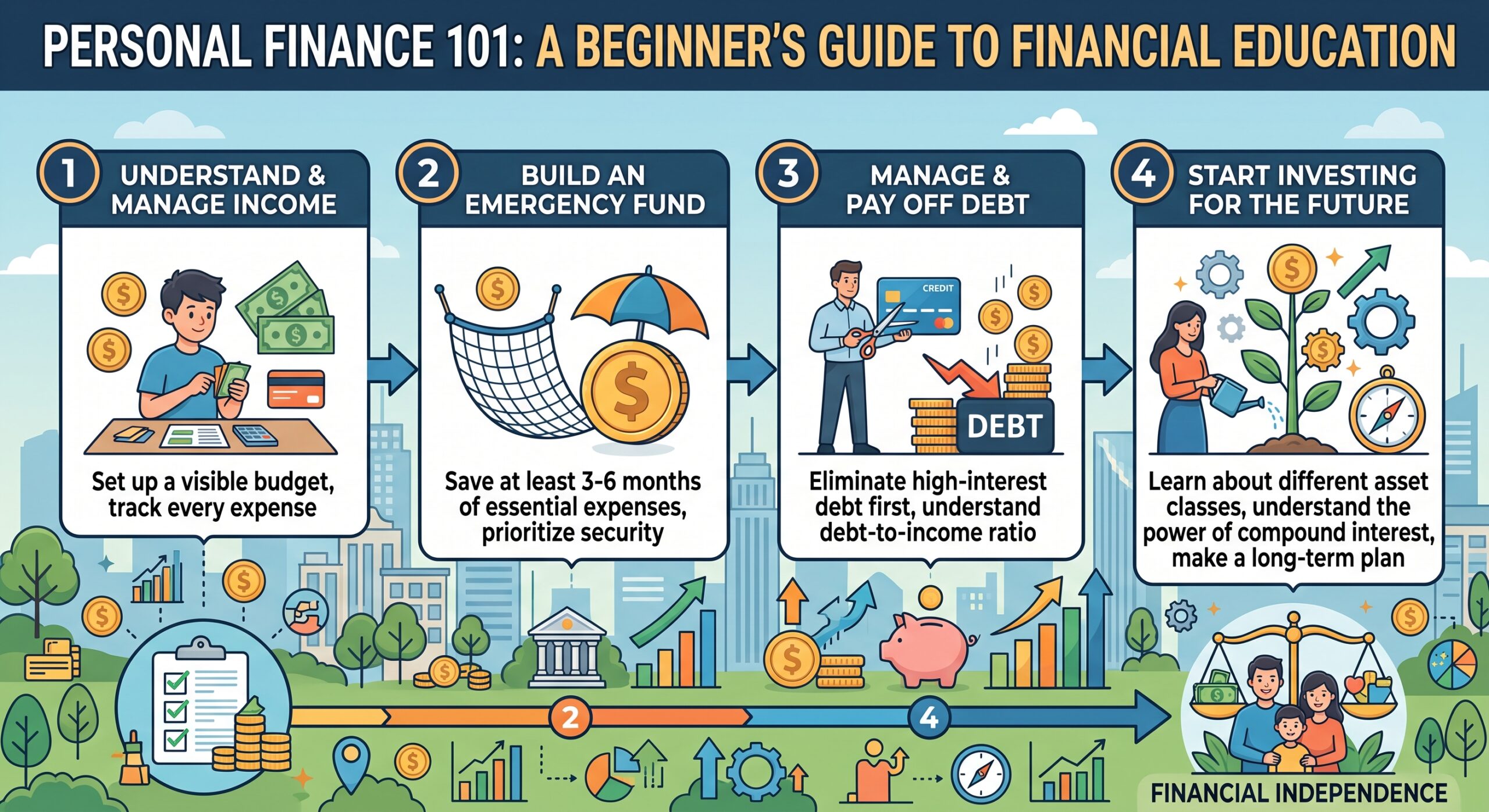

Building long-term wealth and achieving financial independence requires a combination of strategic investing and diversifying your revenue streams. For beginners, the financial world can feel overwhelming. However, by breaking down concepts into manageable components, anyone can start generating side income and growing capital.
This comprehensive guide explores accessible investment strategies and scalable side income ideas designed specifically for beginners entering the modern economy.
1. Setting the Foundation: Basic Investing for Beginners
Before allocating capital to any asset class, it is crucial to understand that investing is a long-term discipline. True investing relies on compound growth—the process where your investment’s earnings are reinvested to generate their own earnings over time.
For beginners, the most effective approach involves automated consistency, diversification, and minimizing unnecessary fees. Here are the most accessible entry points:
Exchange-Traded Funds (ETFs) and Index Funds
Instead of attempting to pick individual winning stocks—a strategy that exposes beginners to high volatility—index tracking funds allow you to purchase a small piece of hundreds of companies simultaneously.
- How it works: An S&P 500 ETF tracks the performance of the 500 largest publicly traded corporations in the United States.
- Why it fits beginners: It provides instant diversification across multiple sectors (technology, healthcare, finance) with extremely low management fees, known as expense ratios.
High-Yield Savings Accounts (HYSAs)
While not a traditional investment vehicle for high growth, an HYSA is an essential tool for cash management and emergency funds. Unlike traditional checking or savings accounts that offer negligible interest rates, high-yield accounts ensure your liquid reserves keep pace with macroeconomic shifts and inflation.
Systematic Investing (Dollar-Cost Averaging)
One of the most powerful behavioral tools for an investor is Dollar-Cost Averaging (DCA). This strategy involves investing a fixed dollar amount into a chosen asset on a regular, automated schedule (e.g., monthly or bi-weekly), regardless of whether the market is up or down. Over time, this removes emotional decision-making and averages out the purchase price of your assets.
2. Dynamic Side Income Ideas requiring Low Initial Capital
While investing grows your existing capital, a side income or “side hustle” increases your active income pool, giving you more capital to invest. The most successful side incomes leverage skills you already possess or allow you to build digital assets that scale.
A. Freelance Content Creation and Technical Writing
The global demand for high-quality, authentic human communication remains exceptionally strong. Businesses across technical, financial, and digital niches constantly outsource their content production to drive search engine optimization (SEO) and client engagement.
- The Opportunity: Writing blog posts, whitepapers, email sequences, or technical documentation.
- How to Start: Choose a specific niche where you have personal interest or professional background (e.g., corporate finance, fitness, or green technology). Build a simple portfolio of three self-initiated sample articles to showcase your writing clarity, and pitch to small businesses or agencies directly.
B. Developing and Selling Digital Products
Trading time directly for money caps your earning potential. Digital products offer an elegant solution because you create the asset once and sell it repeatedly without managing inventory or incurring manufacturing costs.
- The Opportunity: Designing Notion dashboards, Excel financial templates, printable planners, specialized e-books, or design presets.
- How to Start: Identify a common, micro-level problem within an industry. For example, if you are highly organized, create a specific template that helps freelancers track their monthly business expenses. Platforms like Gumroad or Etsy handle the payment processing and digital delivery seamlessly.
C. Online Tutoring and Skill-Based Coaching
The global remote economy has normalized digital learning for all age groups. If you have mastered a specific academic subject, speak multiple languages fluently, or possess professional certifications, you can monetize that knowledge.
- The Opportunity: Academic tutoring, language instruction, or professional coaching (such as remote fitness programming or career resume audits).
- How to Start: Utilize established marketplaces like Preply or Tutor.com to find your initial client base. As you gather positive testimonials, you can transition to independent positioning and charge premium hourly rates.
3. Comparing Entry Barriers and Income Speed
To help you decide where to focus your initial energy, the table below compares the typical startup costs, skill requirements, and timeline expectations for these beginner-friendly financial paths.
| Financial Strategy | Startup Cost | Primary Requirement | Time to First Dollar | Income Potential Type |
|---|---|---|---|---|
| Index Funds / ETFs | Very Low (Fractional shares) | Consistency & Patience | Months to Years | Passive Capital Growth |
| Freelance Writing | Zero | Research & Clarity | 2 to 4 Weeks | Active Income |
| Digital Products | Zero to Low | Problem-Solving Layout | Variable (Days to Weeks) | Scalable Passive Income |
| Online Tutoring | Zero | Domain Expertise | 1 to 2 Weeks | Active Income |
4. Key Rules for Sustainable Financial Growth
Sustaining financial progress requires avoiding common pitfalls that derail beginners. Adhere to these foundational rules as you build your portfolio and income streams:
The Golden Rules of Personal Finance
- Eliminate High-Interest Debt First: Before aggressively deploying money into investments, clear any high-interest consumer debt. The guaranteed return from avoiding a 20% credit card interest charge always beats the projected variable return of the stock market.
- Build an Emergency Buffer: Maintain three to six months of basic living expenses in an accessible, liquid account. This ensures you never have to liquidate your long-term stock market investments during a market downturn to cover unexpected life expenses.
- Verify and Protect Your Assets: The digital financial landscape contains sophisticated scams. Be deeply skeptical of any platform promising “guaranteed high returns” or “get-rich-quick” investment schemes. Stick to reputable, regulated brokerages and verified business tools.
Conclusion: The Power of Micro-Actions
The path to financial security does not require a massive inheritance or a complex background in corporate finance. It begins with micro-actions. By automating a small, regular investment into diversified funds and dedicating a few hours a week to building a scalable side income, you create a powerful compounding effect. Focus on consistency, continue sharpening your high-value skills, and allow time to do the heavy lifting.