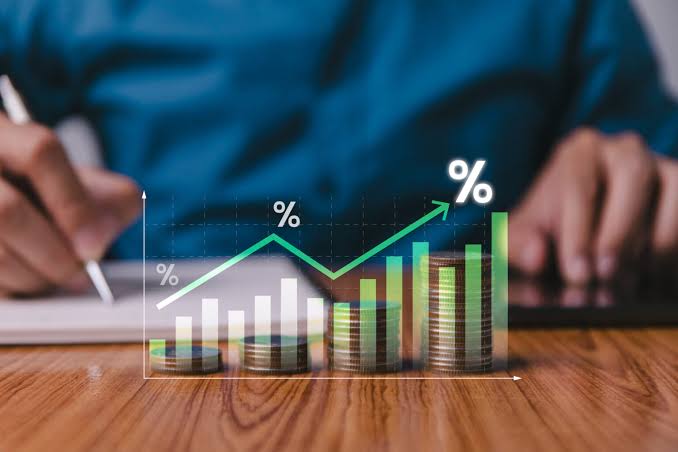
When it comes to building long-term wealth, consistency and strategy are vital. However, there is a silent, mathematical engine behind the world’s most successful portfolios that does the heavy lifting: compound interest.
Often described by Albert Einstein as the “eighth wonder of the world,” compound interest is the foundational mechanism that transforms modest, regular savings into substantial financial assets. Understanding how this process works, how it differs from simple interest, and how to maximize its potential is essential for anyone looking to secure their financial future.
Understanding Compound Interest: The Basics
To appreciate the power of compounding, it is helpful to contrast it with simple interest.
- Simple Interest: You earn returns only on the principal amount—the original sum of money you invested. If you invest $10,000 at a 5% annual simple interest rate, you will earn $500 every year. After ten years, you will have earned $5,000 in interest.
- Compound Interest: You earn returns on your initial principal plus the interest that has accumulated over previous periods. In other words, you are earning interest on interest.
The Mathematical Difference
Let’s look at how this plays out with the same $10,000 investment at a 5% annual rate, compounded annually:
- Year 1: You earn 5% on $10,000, which is $500. Your total is now $10,500.
- Year 2: You earn 5% on your new balance of $10,500, which is $525. Your total becomes $11,025.
- Year 3: You earn 5% on $11,025, which is $551.25. Your total rises to $11,576.25.
While the difference seems negligible in the first few years, the gap expands dramatically over decades. The mathematical formula for compound interest illustrates this exponential trajectory:
$$A = P \left(1 + \frac{r}{n}\right)^{nt}$$
Where:
- $A$ = the future value of the investment, including interest
- $P$ = the principal investment amount
- $r$ = the annual interest rate (decimal)
- $n$ = the number of times interest is compounded per year
- $t$ = the number of years the money is invested
The Core Drivers of Compounding Growth
The speed and scale at which your investment grows via compound interest depend on three critical variables: time, compounding frequency, and the rate of return.
1. The Element of Time: Your Greatest Asset
Time is the fuel that powers compound interest. Because growth is exponential rather than linear, the most dramatic gains occur in the later years of an investment lifecycle.
Consider two hypothetical investors, Alex and Blake, who both earn an average annual return of 8%:
- Alex starts investing at age 25, putting away $300 every month. By age 65, Alex has contributed $144,000 of their own money. Thanks to compound interest, the total portfolio grows to approximately $933,000.
- Blake waits until age 35 to start, but contributes $600 every month—double Alex’s amount. By age 65, Blake has contributed $216,000. Despite contributing significantly more capital, Blake’s portfolio grows to roughly $905,000.
Because Alex gave the money an extra ten years to compound, their investments grew faster and yielded a larger final balance with less out-of-pocket capital.
2. Compounding Frequency
The frequency with which interest is calculated and added to the account balance matters. Interest can be compounded annually, semi-annually, quarterly, monthly, or even daily.
The more frequently interest is compounded, the faster the balance grows. For instance, a $10,000 investment at a 6% interest rate will yield different results after 10 years depending on the schedule:
- Compounded Annually: $17,908.48
- Compounded Monthly: $18,193.97
- Compounded Daily: $18,220.30
While the difference between monthly and daily compounding is subtle, over large sums and long periods, it represents substantial capital.
3. The Rate of Return and the “Rule of 72”
The interest rate or rate of return dictates the steepness of your growth curve. A reliable shortcut used by investors to estimate the impact of compound interest is the Rule of 72.
The Rule of 72: Divide 72 by your expected annual rate of return to determine roughly how many years it will take for your investment to double.
- At a 6% return rate: $72 \div 6 = 12$ years to double your money.
- At a 9% return rate: $72 \div 9 = 8$ years to double your money.
Real-World Vehicles for Compound Growth
In modern finance, you rarely find pure “interest” accounts that offer high enough rates to combat inflation. Instead, investors harness the mechanics of compounding through various market-based vehicles:
| Investment Vehicle | How it Uses Compounding | Risk Level |
| High-Yield Savings Accounts (HYSAs) | Offers a fixed or variable interest rate compounded monthly, ideal for emergency funds. | Very Low |
| Dividend Reinvestment Plans (DRIPs) | Automatically uses stock dividends to buy more shares, increasing future dividend payouts. | Moderate to High |
| Index Funds & ETFs | Capital gains are reinvested into the fund, accelerating wealth accumulation across broad markets. | Moderate |
Practical Strategies to Maximize Compounding
To turn the theory of compound interest into a highly effective wealth-building strategy, consider implementing the following actionable habits:
Start as Early as Imaginable
Do not wait for a high salary to begin investing. Because time is the primary multiplier in the compounding equation, investing small amounts early in life is vastly superior to investing larger amounts later.
Reinvest All Gains Automatically
If you invest in dividend-paying stocks or mutual funds, resist the temptation to cash out those payments. Enable DRIPs (Dividend Reinvestment Plans) so that every dollar generated by your portfolio is immediately funneled back into acquiring more income-producing assets.
Maintain Consistency via Automation
Market timing is notoriously difficult and often counterproductive. Utilize Dollar-Cost Averaging (DCA) by setting up automatic monthly contributions to your investment accounts. This ensures you continuously add to your principal, expanding the base upon which interest is calculated, regardless of short-term market fluctuations.
Keep Fees and Costs Low
High management fees, expense ratios, and trading costs act as a drag on your portfolio. Just as returns compound over time, fees compound negatively, eroding your gains. Opting for low-cost index funds or ETFs preserves more capital to compound over the long haul.
Conclusion
Compound interest is not a get-rich-quick scheme; it is a discipline. It requires patience, consistency, and time to reveal its true potential. In the initial years, the progress may seem slow, but for those who remain disciplined, the exponential curve eventually takes over, allowing your money to work harder for you than you ever worked for it. By starting early, reinvesting continuously, and protecting your capital from unnecessary fees, you can leverage the snowball effect to achieve long-term financial freedom.