When people hear the term “financial education,” they often imagine complex stock market charts, corporate balance sheets, or dense economic jargon. Because of this perception, many assume that financial literacy is only relevant to accountants, investors, or wealthy executives. In reality, financial education is a practical life skill that directly influences your day-to-day decisions, emotional well-being, and overall quality of life.
Financial literacy is not about acquiring vast wealth overnight; it is about understanding how money works in the real world so you can make deliberate, informed choices. From the routine purchases you make at the grocery store to long-term career planning, understanding personal finance provides a framework for control, stability, and freedom.
1. Reducing Daily Stress and Mental Anxiety
One of the most immediate benefits of financial education is a significant reduction in psychological stress. Financial uncertainty is universally recognized as one of the leading causes of anxiety and sleep disruption across the globe.
When you lack a fundamental grasp of your finances, every unexpected expense—such as a routine car repair, an urgent home fix, or a minor health bill—feels like a catastrophic emergency. This constant state of alert drains mental energy and affects performance at work and harmony at home.
Financial education changes this dynamic by introducing simple, structured risk management strategies:
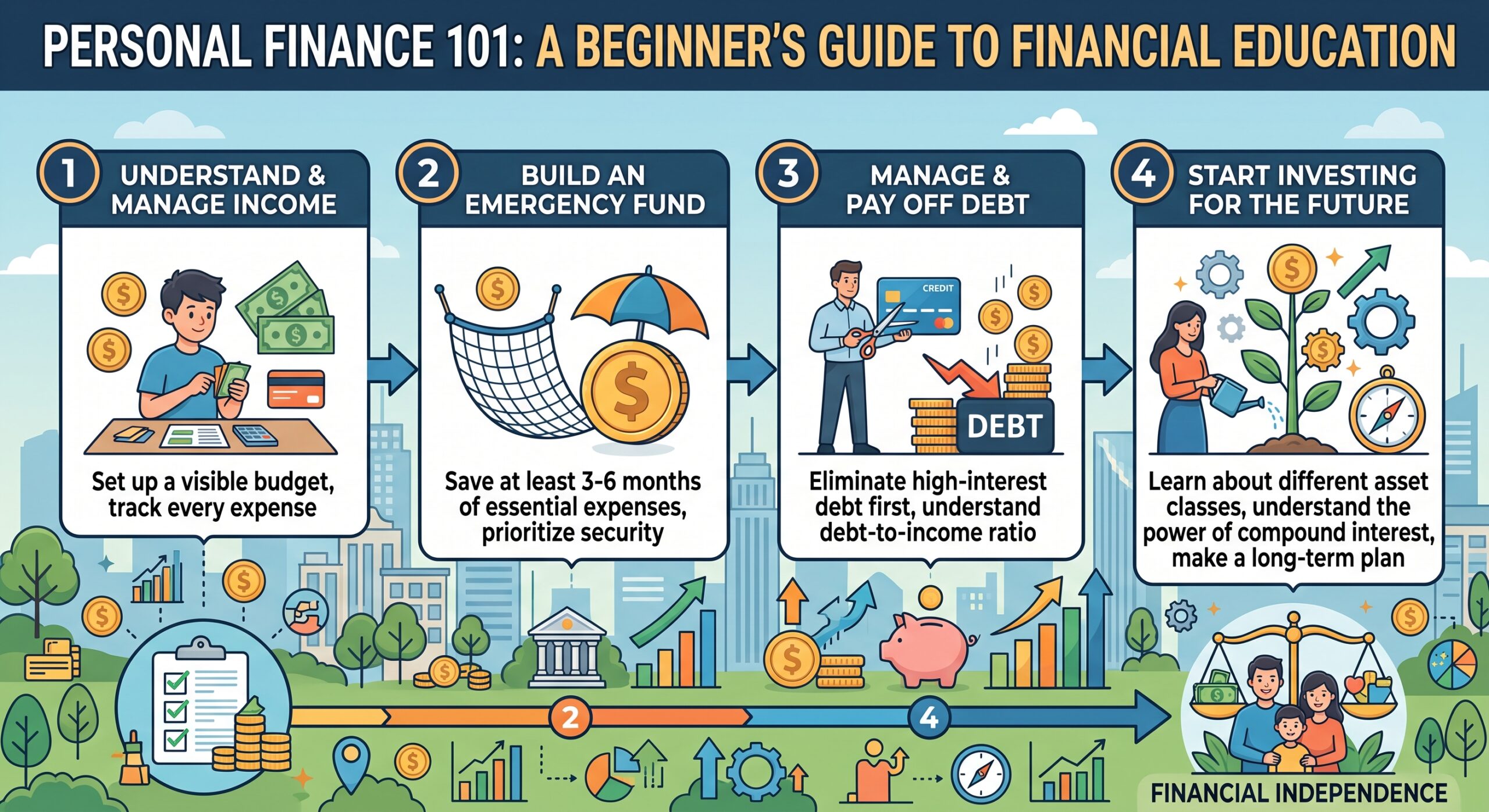
- Cash Flow Clarity: Knowing exactly what enters and leaves your accounts eliminates the constant fear of overdrafts or declined cards.
- Emergency Reserves: Building a buffer of three to six months of living expenses turns what would be a financial crisis into a manageable inconvenience.
- Predictable Routines: Establishing regular automated savings removes the cognitive burden of deciding how much to save each month.
By transforming financial management from a source of guesswork into a structured habit, you protect your mental clarity and reserve your energy for meaningful personal goals.
2. Transforming Budgeting into Intentional Living
A common misconception is that keeping a budget restricts your personal freedom. Many people view budgets as rigid punishment systems designed to strip away life’s daily pleasures—like enjoying a quality coffee, dining out, or pursuing hobbies.
In practice, financial education redefines budgeting as a tool for intentional allocation. Instead of restricting your choices, a budget acts as a clear mirror reflecting your values, ensuring that your spending aligns with what truly matters to you.
| Budgeting Approach | Traditional View | Informed View (Financial Literacy) |
| Primary Focus | Cutting costs and sacrificing enjoyments | Directing money toward priority goals |
| Mindset | Scarcity and restriction | Clarity and conscious decision-making |
| Handling Extra Cash | Impulsive or unaligned spending | Purposeful allocation (e.g., investments, savings, debt payoff) |
| Tracking Outcome | Guilt over minor purchases | Confidence in overall financial trajectory |
When you master basic budgeting frameworks, such as the popular 50/30/20 rule (allocating 50% of income to needs, 30% to wants, and 20% to savings or debt reduction), you eliminate the guilt associated with discretionary spending. You spend money on things you truly value because you know your foundational needs and long-term targets are already secured.
3. Smarter Purchasing and Avoiding Debt Traps
Modern consumer markets are sophisticated environments designed to encourage impulse buying. From subtle e-commerce design tactics to flexible “buy now, pay later” programs, consumer debt mechanisms make it easier than ever to spend money you haven’t yet earned.
Without basic financial education, it is easy to fall into high-interest debt cycles that quietly drain your monthly cash flow. Understanding essential concepts protects you from these common financial traps:
- Compound Interest Dynamics: Recognizing how interest accrues on credit balances reveals the true, long-term cost of revolving debt.
- Opportunity Cost Assessment: Evaluating purchases in terms of hours worked or future earnings foregone helps curb emotional spending.
- Credit Score Mechanics: Understanding how credit utilization and payment history affect your credit profile helps secure lower interest rates when financing major assets like homes or vehicles.
Financial literacy empowers you to pause before clicking “buy,” asking yourself whether a purchase delivers lasting utility or merely temporary gratification.
4. Aligning Work, Time, and Long-Term Independence
Time is an irreplaceable personal resource. Financial education highlights the direct relationship between money and time, helping you move from earning a living to building true autonomy.
Without financial literacy, individuals often find themselves trapped in a cycle of lifestyle inflation—increasing their spending every time their income grows. This forces them to work continuously just to maintain their expanded standard of living, regardless of job satisfaction or personal health.
Financial education breaks this cycle through basic investment concepts:
- Asset vs. Liability Identification: Understanding that assets put money into your pocket over time, while liabilities take money out.
- Passive Growth and Compound Returns: Learning how consistent, regular investments in low-cost index funds or growth vehicles compound across decades.
- Autonomy and Career Flexibility: Building an asset base provides the financial security to negotiate better working conditions, switch industries, or take time off for family without fearing immediate financial ruin.
When your money works for you through deliberate saving and investing, you gain control over how you spend your time.
5. Building Stronger Relationships and a Lasting Legacy
Money is frequently cited as a primary catalyst for conflicts in relationships, whether between domestic partners, family members, or business associates. Differing financial values and unstated expectations often breed resentment.
Financial education establishes a shared vocabulary for open, constructive communication. When partners understand basic financial concepts, they can conduct transparent discussions about household goals, major expenditures, and long-term plans. Instead of arguing over daily receipts, they collaborate on building a shared vision.
Furthermore, financial literacy enables you to model healthy financial habits for family members and dependents, passing down practical knowledge that creates stability across generations.
Practical Steps to Begin Your Financial Education
Improving your financial literacy does not require an advanced degree in economics. You can make immediate progress by taking small, consistent actions:
- Track Your Cash Flow: Spend 30 days recording every expense to gain a realistic picture of your spending habits.
- Read Foundational Literature: Engage with trusted, time-tested personal finance books and reputable educational resources.
- Automate Your Savings: Set up automatic bank transfers to move a portion of your income into savings or investment accounts on payday.
- Review Financial Contracts: Take the time to read the terms, interest rates, and fee schedules on your bank accounts, credit cards, and loans.
Conclusion
Financial education is ultimately about empowerment, not complex arithmetic. It bridges the gap between where you are today and where you want your life to go. By mastering basic principles of cash flow, debt management, and investing, you reduce daily anxiety, spend with intention, and build a resilient foundation for your future. The daily benefits are clear: greater clarity, reduced stress, and the confidence that comes from taking full control of your life’s direction.