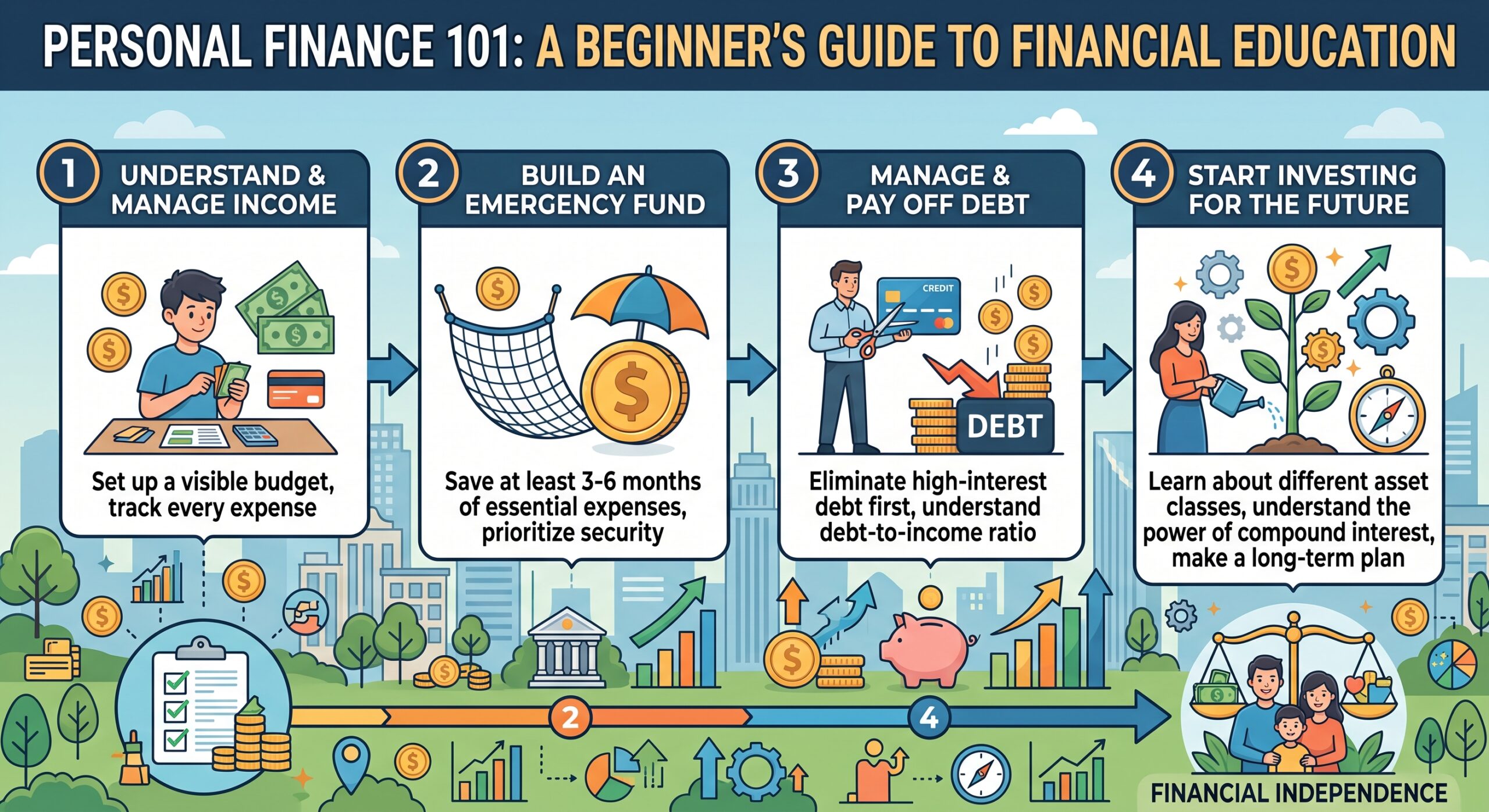

Financial education is the cornerstone of lifelong stability and freedom. In an increasingly complex economic landscape, understanding how money works, how to grow it, and how to protect it is no longer optional—it is an essential life skill. This guide breaks down the core principles of personal finance into actionable steps to help you build a secure financial future.
1. Mastering Cash Flow and Budgeting
At its core, financial management comes down to cash flow: the relationship between what you earn and what you spend. Without a clear view of where your money goes each month, achieving long-term goals becomes nearly impossible.
Budgeting Frameworks
A budget is not a restriction; it is a tool for intentional spending. Different frameworks suit different personality types and financial situations:
| Budgeting Model | How It Works | Best Used For |
| 50/30/20 Rule | Allocates 50% to Needs, 30% to Wants, and 20% to Savings/Debt. | Beginners seeking a simple, balanced structure. |
| Zero-Based Budgeting | Assigns every single dollar a job until Income – Expenses = $0. | People who want total control and detail over spending. |
| Pay Yourself First | Automatically transfers savings/investments before paying any discretionary expenses. | Automated savers who dislike tracking every transaction. |
Tracking Expenses
To build an effective budget, track every expense for 30 to 90 days. Group your spending into fixed costs (rent, insurance, utilities) and variable costs (groceries, dining out, entertainment). Identifying leaks in variable spending provides immediate capital to redirect toward savings.
2. Debt Elimination and Financial Safety Nets
Carrying consumer debt is one of the largest obstacles to building wealth. High-interest liabilities drain your monthly cash flow and erode long-term earning potential.
       [ Income ]
           │
           ▼
┌──────────────────────┐
│  Emergency Reserve   │ (3–6 Months of Expenses)
└──────────┬───────────┘
           │
           ▼
┌──────────────────────┐
│ High-Interest Debt   │ (Payoff: Avalanche or Snowball)
└──────────┬───────────┘
           │
           ▼
┌──────────────────────┐
│ Wealth Accumulation  │ (Investing & Asset Allocation)
└──────────────────────┘
Strategic Debt Reduction
If you carry multiple debts, focus your payoff strategy using one of two proven approaches:
- The Debt Avalanche Method: Pay minimums on all obligations while allocating all extra funds toward the debt with the highest interest rate. Mathematically, this minimizes the total interest paid over time.
- The Debt Snowball Method: Target the smallest total balance first while paying minimums on the rest. Eliminating small accounts quickly provides psychological momentum.
Establishing an Emergency Fund
Before aggressively investing, establish a financial cushion. An emergency fund protects you against unexpected job loss, medical costs, or major home repairs without forcing you into high-interest credit card debt.
- Target Amount: 3 to 6 months of essential living expenses.
- Storage Location: High-Yield Savings Accounts (HYSA) or money market funds that offer immediate liquidity and capital preservation.
3. Wealth Building Through Investing
Saving money is crucial, but cash held in basic savings accounts steadily loses purchasing power over time due to inflation. Real wealth creation requires investing in assets that outpace inflation over long horizons.
The Power of Compound Interest
Compound interest occurs when earnings on principal generate their own earnings over time. The formula for compound growth is:
Where:
- $A$ = Final amount accumulated
- $P$ = Initial principal balance
- $r$ = Annual interest rate (decimal)
- $n$ = Number of times interest compounds per year
- $t$ = Time in years
Starting early dramatically reduces the out-of-pocket capital required to reach financial goals due to the exponential nature of time ($t$) in the equation.
Key Asset Classes
- Broad-Market Index Funds and ETFs: Low-cost, diversified funds that track major indices (such as the S&P 500 or Total World Stock Index). They provide instant diversification and lower individual stock risk.
- Bonds and Fixed Income: Debt instruments issued by governments or corporations that pay predictable income with lower volatility than equities.
- Real Estate: Physical properties or Real Estate Investment Trusts (REITs) that offer rental yield and long-term capital appreciation.
Risk Tolerance and Asset Allocation
Your mix of stocks, bonds, and cash depends on your investment horizon and personal comfort with market fluctuations. Younger investors with decades before retirement can generally tolerate higher exposure to equities, whereas those nearing retirement benefit from higher fixed-income allocations to preserve capital.
4. Protecting Your Assets and Estate Planning
Building wealth is only half the battle; safeguarding it against unforeseen events completes a solid financial architecture.
Comprehensive Risk Management
Evaluate your current coverage across essential policies:
- Health Insurance: Protects against catastrophic medical expenses.
- Term Life Insurance: Provides income replacement for dependents if you pass away prematurely.
- Disability Insurance: Replaces a portion of your income if illness or injury prevents you from working.
Estate Planning Basics
Regardless of net worth, core estate documents ensure your financial assets and care decisions pass smoothly to designated heirs:
- Will: Outlines asset distribution and guardianship for minors.
- Power of Attorney: Designates a trusted person to make financial or medical decisions if you become incapacitated.
- Beneficiary Designations: Keep primary beneficiaries updated directly on bank, brokerage, and retirement accounts to bypass probate.
5. Cultivating Sustainable Financial Habits
Financial success is rarely about one-time windfall wins; it stems from small, consistent behavioral choices over long periods.
- Automate Everything: Set up automatic payroll transfers into savings and investment accounts on payday to remove emotional friction.
- Avoid Lifestyle Creep: As your income grows through raises or promotions, direct a portion of new earnings directly into investments before adjusting your lifestyle upward.
- Review Regularly: Schedule quarterly check-ins to rebalance your investment portfolio, audit recurring subscriptions, and adjust your budget for upcoming life events.