Financial freedom is rarely the result of a single brilliant investments or a sudden windfall. Instead, it is built on the quiet foundation of small, repeatable decisions made day after day. Just as physical fitness requires consistent training rather than an occasional trip to the gym, long-term financial security is the product of strong, sustainable habits.
However, the world of modern personal finance is filled with friction. From seamless mobile payments to frictionless e-commerce, spending money has never been easier, while saving and investing often feel abstract or restrictive. To build financial habits that endure, you must look beyond short-term budget hacks and focus on behavioral design, systematic planning, and the psychological principles that turn conscious decisions into automatic routines.
1. The Psychology of Financial Habit Formation
Most financial plans fail not because the mathematics is flawed, but because human psychology gets in the way. Traditional financial advice tells you to rely on willpower: spend less, save more, and resist temptation. Yet, willpower is a finite resource that drains throughout the day.
To build habits that last, you need to understand the Habit Loop, popularized by behavioral scientists:
- The Cue: A trigger that initiates a behavior (e.g., feeling stressed after work).
- The Routine: The behavior itself (e.g., browsing online shopping sites or ordering food delivery).
- The Reward: The instant gratification or relief (e.g., a brief dopamine hit).
To reshape a bad financial habit, you do not try to eliminate the cue or the reward. Instead, you change the routine. If stress triggers a urge to spend, replace the routine with a zero-cost habit that provides a similar release, such as going for a run, calling a friend, or stepping outside for fresh air. Over time, your brain rewires to seek stress relief through healthy, low-cost activities rather than retail therapy.
2. Shift from Goal-Oriented to Identity-Based Habits
When setting financial objectives, most people focus on outcome-based goals: “I want to save $10,000,” or “I want to pay off my credit card debt.” While outcomes provide direction, they rarely sustain momentum once achieved or when progress stalls.
A far more powerful approach is to build identity-based habits. Instead of focusing on what you want to achieve, focus on who you want to become:
- Instead of saying “I’m trying to save money,” adopt the mindset: “I am a thoughtful investor who values long-term freedom over short-term consumption.”
- Instead of saying “I can’t afford that,” shift to: “That purchase doesn’t align with my priorities.”
Every action you take is a vote for the person you wish to be. When you choose to transfer $50 into a savings account, you are proving to yourself that you are someone who prioritizes security. Over time, this shift in self-identity turns financial management from a chore into a natural expression of who you are.
3. Master the Core Pillars of Long-Term Wealth
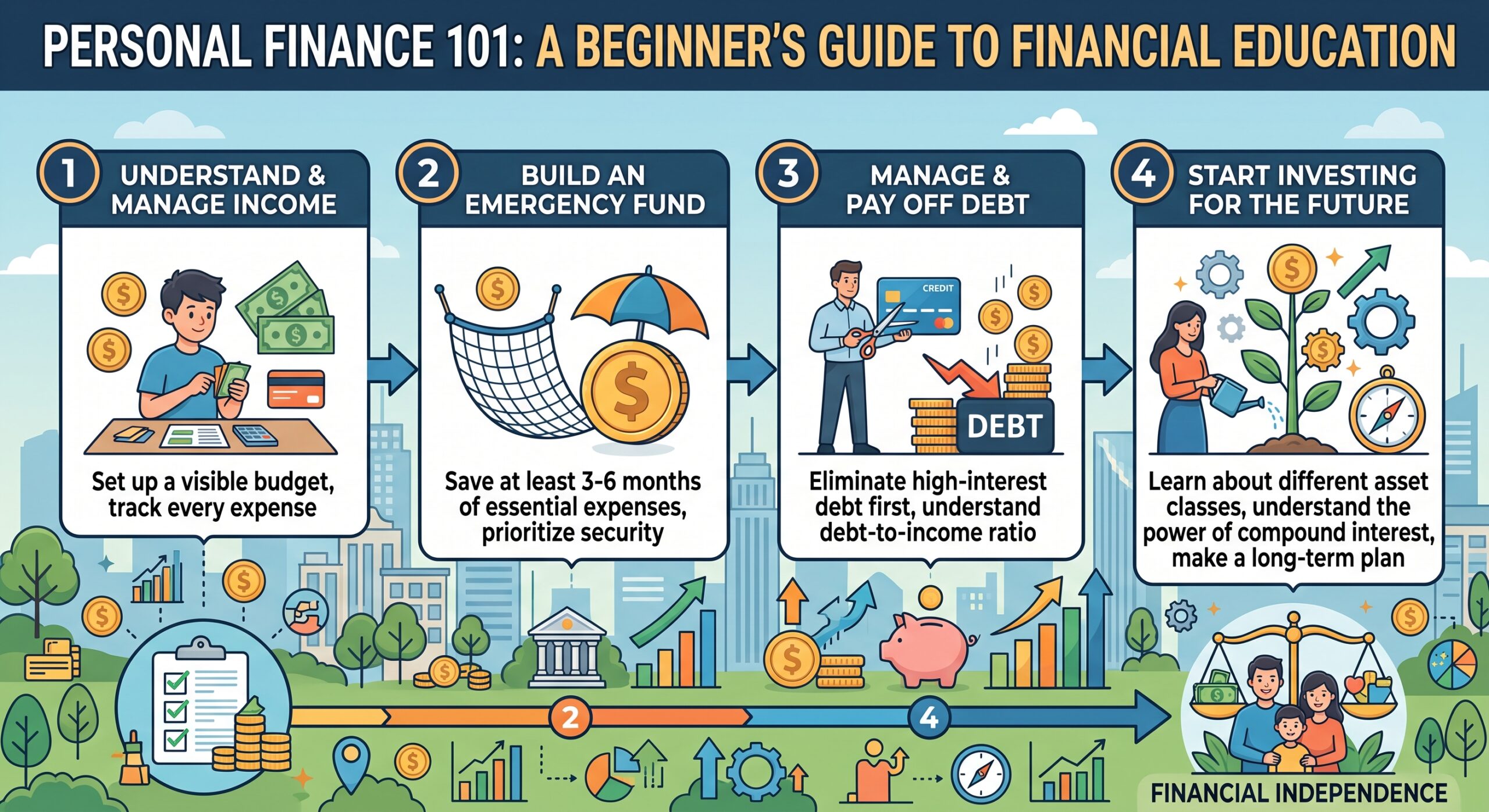
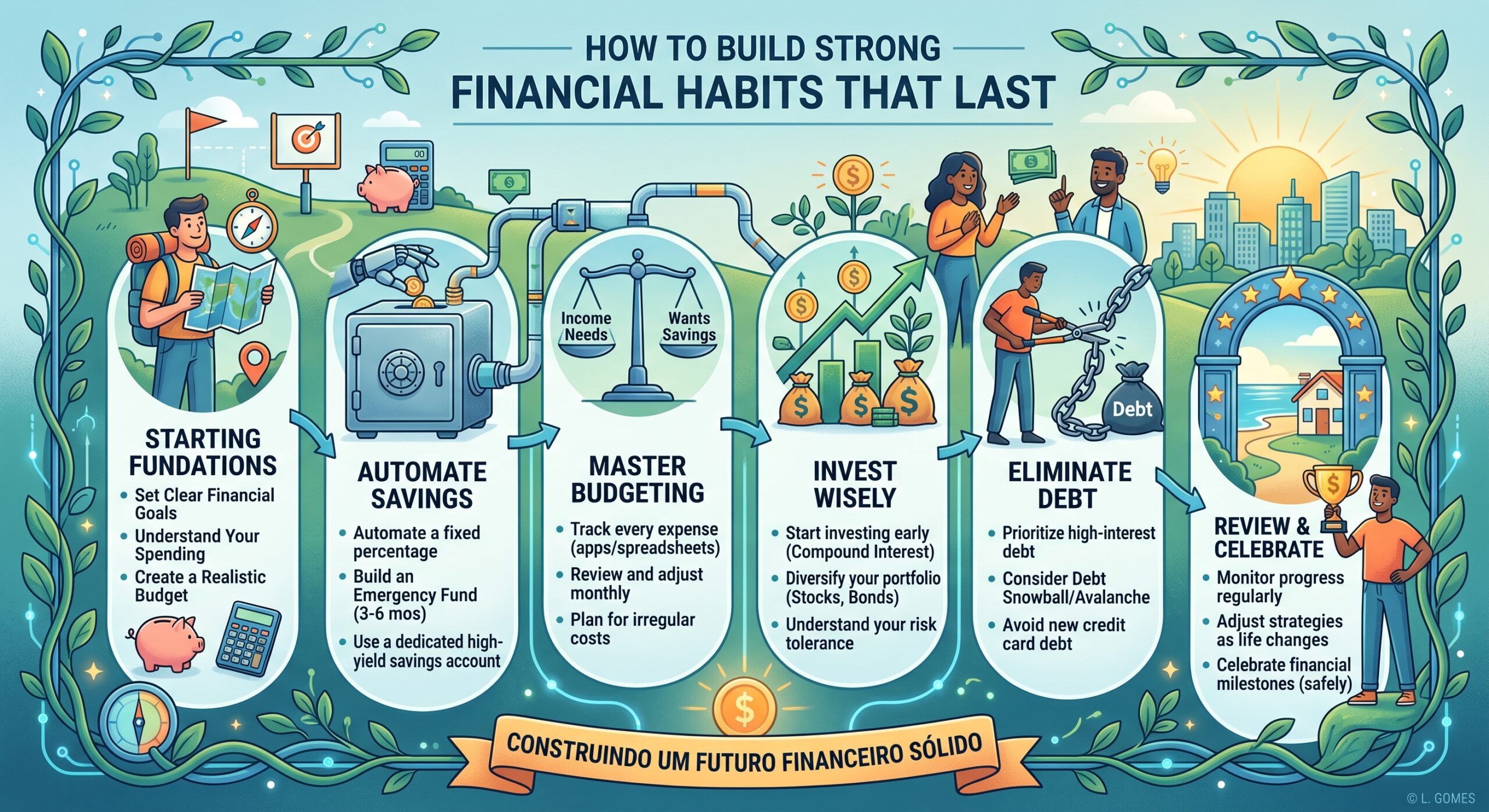
While habits are psychological, they must be applied to sound financial principles. To build a resilient financial base, focus your daily and monthly habits around four core pillars:
A. Automate Your Cash Flow (“Pay Yourself First”)
Relying on manual transfers at the end of the month usually leaves you with nothing left to save. The most effective way to guarantee consistent savings is to automate the process:
- Set up automatic transfers from your checking account to your savings or investment accounts on payday.
- Treat your future savings as a mandatory monthly expense—just like rent or utilities.
- Live on whatever remains after your savings and investments have been set aside.
B. Track Inputs, Not Just Outputs
Instead of obsessing over daily stock market fluctuations or net worth totals, build a weekly habit around monitoring your cash flow inputs:
- Review your recent transactions once a week to catch subscription traps or unintended spending.
- Categorize your spending to ensure your money aligns with your actual priorities rather than unconscious impulses.
C. Construct a Frictionless Emergency Buffer
Financial habits quickly fall apart during unexpected crises—a sudden medical bill, home repair, or job transition. Having a liquid emergency fund equivalent to 3 to 6 months of essential living expenses creates a psychological safety net. This buffer prevents you from accumulating high-interest debt when life inevitably interrupts your plans.
4. Environment Design: Make Good Choices Frictionless
One of the most effective strategies for maintaining habits is environment design. Make desirable financial behaviors easy and frictionless, while making impulsive behaviors difficult and awkward.
| Desired Behavior | Environmental Modification |
| Reduce impulse purchases | Remove saved credit card details from online browser autofill and shopping apps. |
| Increase monthly savings | Schedule recurring automatic transfers to occur 24 hours after payday. |
| Avoid lifestyle inflation | Unsubscribe from retail promotional emails and turn off shopping app notifications. |
| Maintain budget awareness | Keep your financial tracking app on your phone’s home screen. |
By adding a delay—such as a mandatory 48-hour waiting period for non-essential purchases—you allow the emotional urge to buy to cool off, letting rational decision-making take over.
5. Embrace the Power of Systems Over Perfection
A common pitfall in personal finance is the “all-or-nothing” trap. People attempt aggressive, hyper-restrictive budgets, only to abandon them entirely after a single minor slip-up.
Sustainable habits are built on consistency, not perfection. A modest budget that you adhere to 90% of the time over five years will yield vastly superior results compared to an extreme budget that you abandon after two months.
The 80/20 Rule of Personal Finance: Focus 80% of your energy on the big wins—increasing your primary earning potential, maintaining a low baseline for fixed housing/transportation costs, and consistently investing—rather than obsessing over small, daily conveniences that bring genuine joy.
Final Thoughts: The Compound Effect of Daily Choices
Building strong financial habits is a marathon, not a sprint. Just as compound interest accelerates wealth creation over decades, the small habits you practice today compound in impact over time.
Start small. Choose one friction point in your current financial life—whether that means automating a tiny weekly transfer, auditing your recurring subscriptions, or implementing a 48-hour rule—and lock it down. Once that behavior becomes second nature, layer on the next. By mastering the psychology of habit design and aligning your daily actions with long-term goals, you build a resilient financial foundation designed to last a lifetime.