Building long-term wealth is rarely a matter of choosing a single path. While financial media often pits active investing against passive strategies, the most resilient wealth-building framework relies on a harmonious synergy between the two.
Understanding how to balance active and passive income investments is essential for anyone seeking financial independence. By combining the immediate, high-upside potential of active strategies with the hands-off, compounding power of passive vehicles, you create a portfolio designed for both growth and stability.
1. Defining the Core Archetypes
To create a balanced dynamic, you must first understand what each investment philosophy brings to the table.
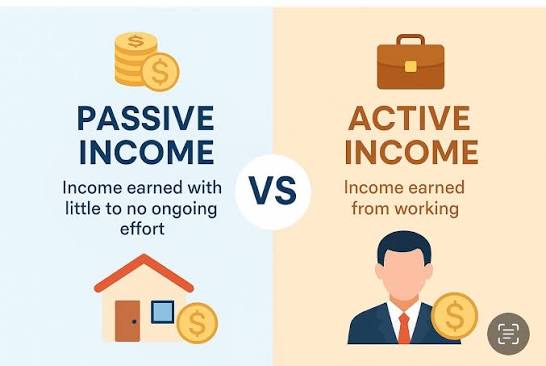
       ACTIVE INVESTING                    PASSIVE INVESTING
  ┌─────────────────────────┐         ┌─────────────────────────┐
  │ High Effort / High Control│         │ Low Effort / Automated  │
  │ Short-Term / Tactical   │    +    │ Long-Term Compounding   │
  │ Skill-Driven Returns    │         │ Market-Driven Returns   │
  └─────────────────────────┘         └─────────────────────────┘
Active Income Investments
Active investments require continuous time, skill, direct oversight, or operational management. The returns on active investments are directly tied to your involvement and specialized knowledge.
- Examples: Active real estate management (fix-and-flips or short-term rentals), angel investing, active trading (swing or position trading), and direct business ownership.
- The Advantage: Higher potential return on investment (ROI) and direct control over outcomes.
- The Trade-off: High time commitment, higher operational risk, and lack of true scalability without hiring teams.
Passive Income Investments
Passive investments are designed to generate steady income or capital appreciation with minimal ongoing effort after the initial setup and capital commitment.
- Examples: Index funds, dividend-paying stock ETFs, Real Estate Investment Trusts (REITs), peer-to-peer lending platforms, and high-yield bonds.
- The Advantage: Time freedom, broad diversification, lower stress, and predictable compounding over long time horizons.
- The Trade-off: Capped returns anchored to overall market performance, lack of direct control over individual assets, and vulnerability to macroeconomic downturns.
2. Why Synergy Trumps a Singular Approach
Relying exclusively on active investments can lead to burnout, overconcentration risk, and liquidity bottlenecks. Conversely, relying purely on passive investments requires substantial starting capital and long timeframes before yielding life-changing cash flow.
Combining both strategies creates a flywheel effect:
The Wealth Flywheel: Active investments generate concentrated capital spikes and high cash yields. Channeling those active returns directly into passive vehicles locks in gains and builds an automated financial floor.
| Dimension | Active Income Investments | Passive Income Investments | Strategic Synergy |
|---|---|---|---|
| Time Investment | High (10–30+ hrs/week) | Low (1–2 hrs/month) | Active feeds passive; passive frees up future time. |
| Risk Profile | Concentrated / Skill-dependent | Diversified / Market-dependent | Active provides upside; passive mitigates downside. |
| Return Potential | Variable / Uncapped | Predictable / Market-average | Smoothes out total annual returns. |
| Liquidity | Often illiquid (property, business) | Highly liquid (stocks, ETFs) | Passive provides buffer for active opportunities. |
3. Frameworks for Allocating Your Portfolio
There is no universal ratio for balancing active and passive investments. Your ideal mix depends on three primary variables: your time availability, risk tolerance, and current wealth stage.
Model A: The 70/30 Capital Accumulation Framework
Ideal for early-to-mid career investors focused on aggressive wealth growth.
- 70% Passive Core: Broad-market equity ETFs, dividend index funds, and investment-grade bond funds form a stable baseline that grows automatically.
- 30% Active Satellite: Concentrated capital allocated toward high-yield opportunities—such as local real estate syndications, side businesses, or active market positioning.
Model B: The Barbell Strategy
Popularized by risk analysts, this strategy eliminates the middle ground to optimize risk-reward profiles.
- 80–90% Ultra-Safe Passive Assets: Treasury bills, index funds, and prime money market assets guarantee capital preservation and inflation-hedged growth.
- 10–20% High-Upside Active Bets: High-conviction, asymmetrical opportunities where downside is capped to the invested capital, but upside is exponential.
Model C: Life-Stage Allocation Shifts
Your ratio should evolve over time as your capacity for active effort changes:
Early Career (20s–30s)    Mid Career (40s–50s)     Late Career / Retirement (60s+)
┌─────────────────────┐   ┌─────────────────────┐   ┌─────────────────────┐
│  60% Active Income  │   │  40% Active Income  │   │  10% Active Income  │
│  40% Passive Core   │   │  60% Passive Core   │   │  90% Passive Income │
└─────────────────────┘   └─────────────────────┘   └─────────────────────┘
 Higher risk capacity,      Balanced growth and       Preservation of capital,
 high time energy.          cash-flow transition.    maximum time freedom.
4. Four Step-by-Step Rules for Execution
Rule 1: Never Risk Passive Capital on Active Experiments
Maintain a strict firewall between your long-term passive foundation and active ventures. Your passive portfolio represents your long-term financial security; it should never be liquidated or leveraged to finance high-risk active plays.
Rule 2: Automate the Active-to-Passive Pipeline
Set up systematic rules for profits generated by active investments:
- Sweep 50% of active net profits into tax reserves or cash equivalents.
- Direct 30% into low-cost, passive indexing assets immediately.
- Retain 20% for reinvestment back into active opportunities.
Rule 3: Account for the “Cost of Time”
Evaluate active returns by factoring in your personal hourly rate. If an active real estate property generates $10,000 annually but demands 300 hours of labor, your effective yield is $33.33/hour—plus capital exposure. If passive index funds yield $7,000 for zero hours of effort, the passive alternative may offer superior risk-adjusted value.
Rule 4: Rebalance Periodically
Set calendar triggers (quarterly or semi-annually) to rebalance. If an active venture grows to represent an oversized portion of your net worth, harvest gains and reallocate them into diversified passive holdings to lock in wealth.
Key Takeaways
Finding balance between active and passive investments isn’t about choosing a team—it’s about building a cohesive financial system. Active income strategies supply the speed and scale required to build meaningful capital, while passive investments provide the stability, automation, and compounding power necessary to preserve and grow that capital over time.
By defining your risk tolerance, keeping your operational costs low, and systematically sweeping active profits into passive foundations, you create an enduring engine for financial freedom.