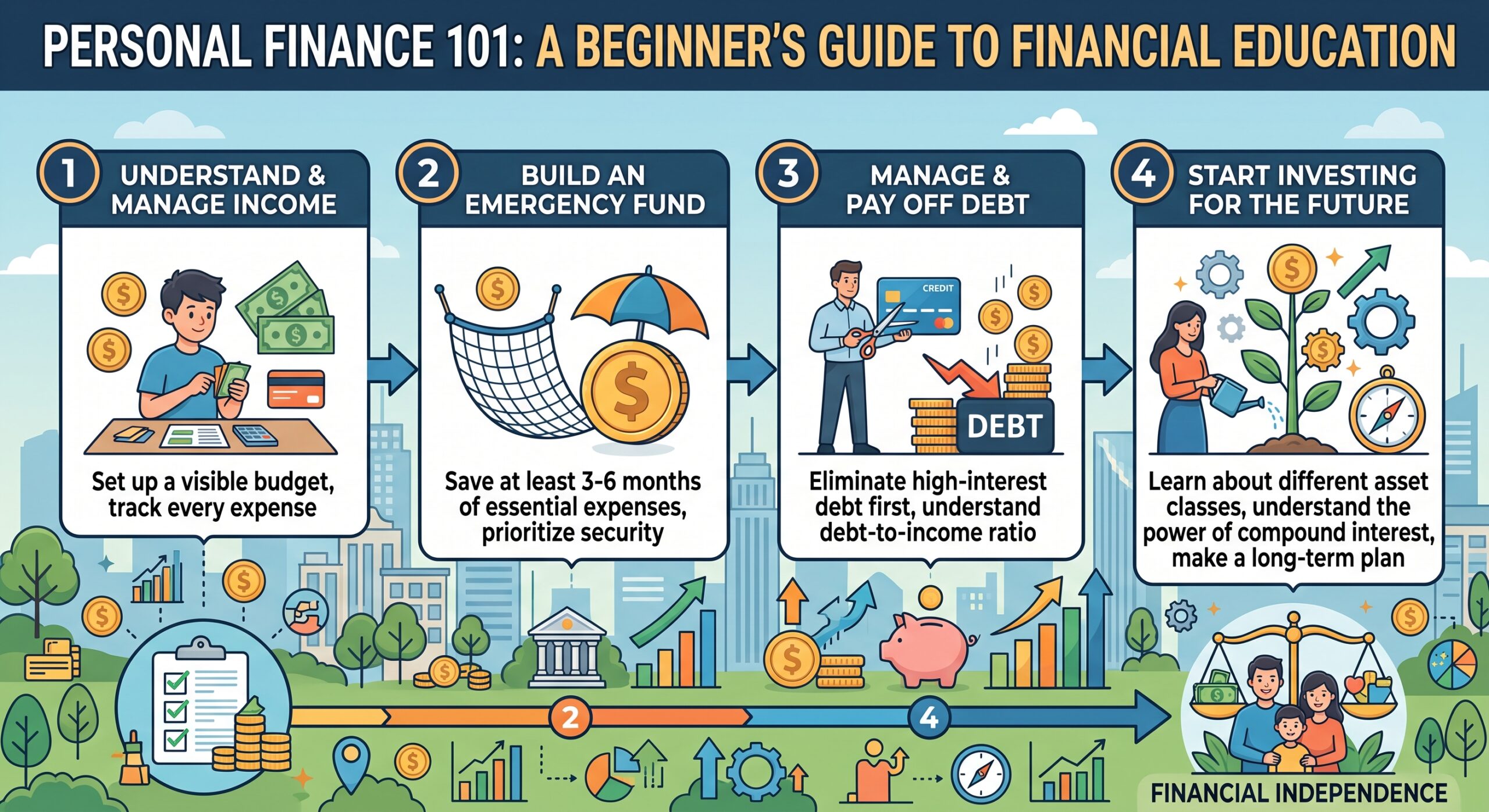

Building a reliable stream of long-term income is the cornerstone of financial independence. Whether you are planning for retirement, looking to supplement your current earnings, or aiming to build generational wealth, the strategy remains the same: deploying capital into assets that generate consistent, recurring cash flow while protecting against inflation.
However, achieving sustainable long-term income requires a delicate balance between risk and reward. Relying solely on high-yield assets can expose your portfolio to capital degradation, while being too conservative can result in purchasing power being eroded by inflation.
This comprehensive guide explores the top investment vehicles for long-term income generation, evaluating their mechanics, risk profiles, and roles in a diversified portfolio.
1. Dividend Growth Stocks
For investors seeking a balance of current income and capital appreciation, dividend growth stocks are an exceptional choice. Unlike companies that pay a static high yield but offer little growth, dividend growth companies possess strong balance sheets, robust competitive advantages, and a history of increasing their payouts year after year.
The Power of Dividend Aristocrats and Kings
Investors often look toward Dividend Aristocrats (S&P 500 companies that have increased their dividends for at least 25 consecutive years) and Dividend Kings (companies with 50-plus years of consecutive increases). These businesses—typically found in stable sectors like consumer staples, healthcare, and utilities—have proven their ability to generate income through multiple economic cycles, recessions, and market crashes.
- Pros: Growing income stream that acts as a natural inflation hedge; potential for significant capital appreciation.
- Cons: Dividend payments are never guaranteed and can be cut during severe corporate distress; higher volatility than fixed-income assets.
2. Real Estate Investment Trusts (REITs)
Real Estate Investment Trusts (REITs) offer a way to invest in real estate without the operational headaches of being a landlord. REITs are companies that own, operate, or finance income-producing real estate across various sectors, including residential apartments, commercial office buildings, healthcare facilities, and data centers.
By law, REITs must distribute at least 90% of their taxable income to shareholders in the form of dividends. This structural requirement makes them one of the highest-yielding liquid asset classes available.
Types of REITs for Income
- Equity REITs: Own and manage physical properties. Income is derived primarily from tenant rents.
- Mortgage REITs (mREITs): Invest in mortgages and mortgage-backed securities. They generate income from the interest spread but carry higher interest rate risk.
Portfolio Tip: Focus on structural growth trends. Data center REITs and logistics/warehouse REITs often enjoy higher demand and stronger rent growth than traditional retail or office REITs in the modern digital economy.
3. High-Yield Fixed Income and Corporate Bonds
While equities offer growth, fixed income provides stability and predictability. Bonds are essentially loans made by an investor to a borrower (such as a corporation or government). In exchange, the borrower agrees to pay regular interest (coupon payments) and return the principal upon maturity.
The Yield Curve and Bond Strategies
When interest rates are elevated, locking in yields via investment-grade corporate bonds or government debt (such as U.S. Treasuries) becomes highly attractive.
To manage interest rate risk, many long-term income investors utilize a bond laddering strategy. By purchasing bonds that mature at different intervals (e.g., 1-year, 3-year, 5-year, and 10-year notes), you ensure a steady flow of liquid cash that can be reinvested at prevailing market rates if interest rates rise.
4. Broad-Market and Specialized Income ETFs
For investors who prefer a hands-off approach, Exchange-Traded Funds (ETFs) offer instant diversification across hundreds of income-producing assets through a single vehicle.
S&P 500 and Dividend ETFs
Broad-market ETFs tracking index funds like the S&P 500 provide a reliable, albeit lower, baseline dividend yield alongside immense long-term capital growth. However, for maximized cash flow, specialized income ETFs are preferred:
- Dividend Yield ETFs: Focus purely on equities with above-average dividend payouts.
- Covered Call ETFs: Use derivative strategies (selling call options on an underlying index) to generate high monthly income, though this structure typically caps the upside potential of capital gains.
5. Alternative Income: ESG and Green Energy Infrastructure
The global transition toward sustainability has opened up a highly resilient asset class for income-focused investors: sustainable infrastructure and alternative energy funds.
These investments often take the form of “Yieldcos” or specialized infrastructure funds that own renewable energy assets, such as wind farms, solar arrays, and regulated power grids. Because these facilities operate under highly predictable, long-term power purchase agreements (PPAs) with utilities and corporations, they generate stable, bond-like cash flows that are redistributed to investors as dividends. Investing in this sector allows individuals to align their income generation goals with global environmental, social, and governance (ESG) trends.
Evaluating Income Investments: Key Metrics
To successfully build an income portfolio, you must look beyond the headline yield. A high yield can sometimes be a warning sign of a failing business (a “value trap”). Use these metrics to evaluate sustainability:
| Metric | Definition | Why It Matters |
| Dividend Yield | Annual dividend per share divided by the stock price. | Measures the current return on your investment capital. |
| Payout Ratio | The percentage of earnings paid out as dividends. | A ratio above 70-80% for standard corporations may indicate the dividend is unsustainable. |
| Funds From Operations (FFO) | The primary cash flow metric used for REITs. | Traditional earnings metrics don’t accurately reflect REIT cash flow due to real estate depreciation. |
Mitigating Risk in a Long-Term Income Portfolio
An effective income strategy must account for economic shifts, market volatility, and changing interest rate environments. Diversifying across asset classes is paramount. When equity markets decline, fixed-income assets often stabilize a portfolio; when inflation rises, real estate and dividend-growth equities provide a necessary offset.
Furthermore, long-term income generation is greatly amplified by the power of compounding. During the accumulation phase, enrolling in a Dividend Reinvestment Plan (DRIP) allows your distributions to automatically buy more fractional shares of the asset, exponentially increasing your future payout capacity without requiring additional out-of-pocket capital.
Conclusion
The ideal long-term income portfolio is not built on a single high-yielding asset, but on a robust ecosystem of diversified income streams. By blending the growth potential of dividend-paying equities, the structural cash flows of real estate, the stability of high-quality fixed income, and the forward-looking stability of sustainable infrastructure, investors can build a resilient financial foundation capable of generating reliable income for decades to come.