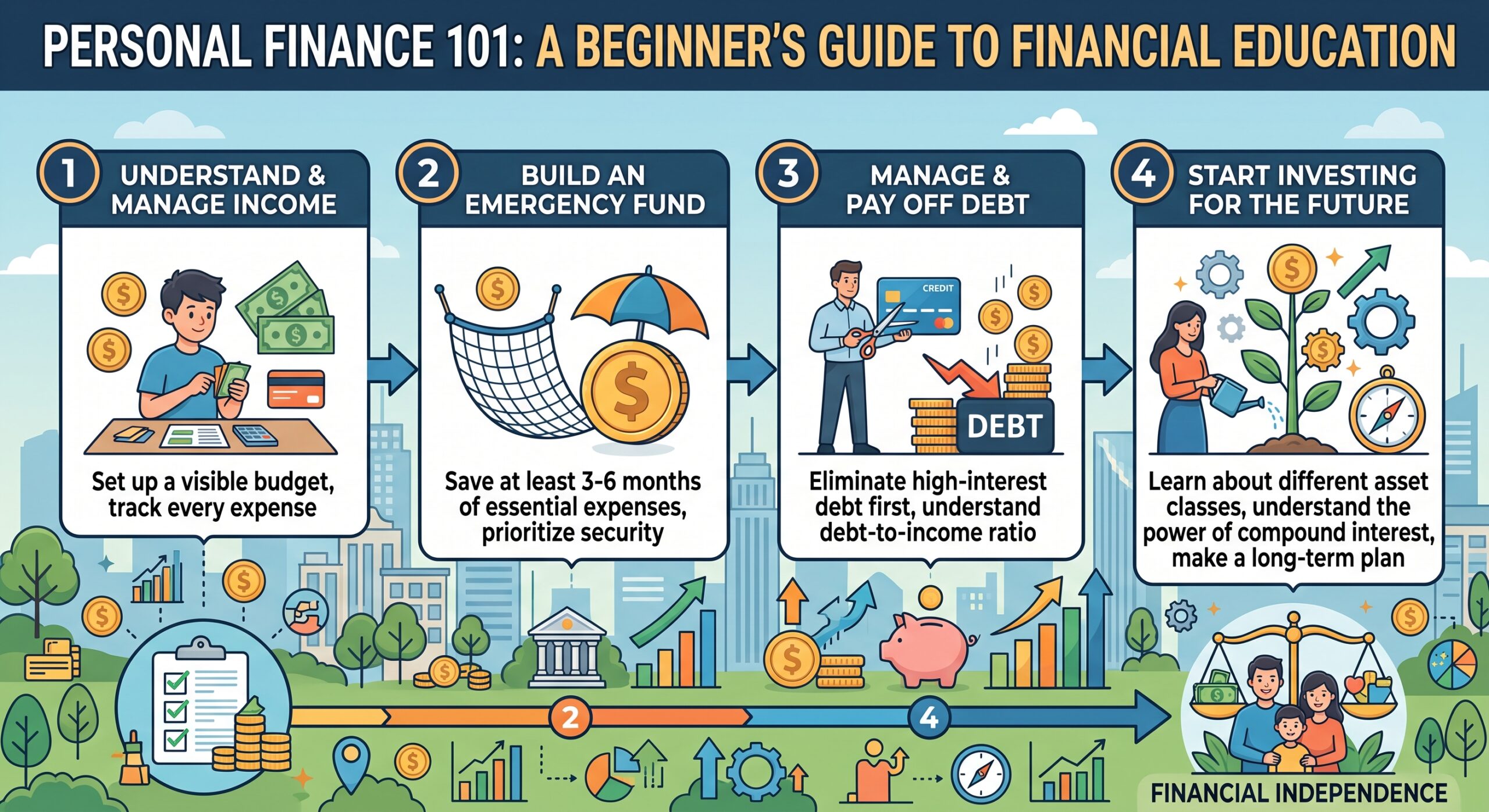

Building wealth is rarely the result of a single “lucky break.” Instead, it is a disciplined process of converting earned income into yielding assets and diversifying how money flows into your life. In a modern economy characterized by inflation and market volatility, relying solely on a traditional salary is often insufficient for long-term financial freedom.
To truly grow your wealth, you must master two parallel tracks: strategic investing and the cultivation of multiple income streams. This guide explores the mechanics of wealth accumulation, from understanding market fundamentals to leveraging digital opportunities.
1. The Foundation: Shifting from Saving to Investing
While saving is about preservation, investing is about growth. The primary enemy of stagnant cash is inflation, which erodes purchasing power over time. To counter this, capital must be deployed into vehicles that offer a rate of return higher than the inflation rate.
The Power of Compounding
The most potent tool in a wealth-builder’s arsenal is time. Through compound interest, the returns on your initial investment begin to earn their own returns.
Formula for Success:
- A: The future value of the investment
- P: The principal amount
- r: Annual interest rate
- n: Number of times interest is compounded per year
- t: Number of years the money is invested
By starting early, even small contributions can snowball into significant sums.
2. Strategic Investing: Navigating the Markets
Successful investing requires a balance between risk tolerance and financial goals. A diversified portfolio is the standard defense against the failure of any single asset class.
Equity Markets and ETFs
For many, the stock market is the most accessible path to wealth. Rather than attempting to “beat the market” by picking individual stocks—a feat even professionals struggle with—many investors turn to Exchange-Traded Funds (ETFs).
- S&P 500 ETFs: These funds track the 500 largest companies in the U.S., providing instant diversification across tech, healthcare, finance, and consumer goods. They are favored for their low expense ratios and historical resilience.
- Dividend Growth Stocks: Investing in companies with a history of increasing dividends provides a “double win”: capital appreciation (the stock price goes up) and a steady stream of passive cash flow.
Alternative Investments and Sustainability
Modern portfolios are increasingly looking toward ESG (Environmental, Social, and Governance) focused funds. As global economies shift toward green energy and sustainable corporate strategies, companies prioritizing these factors are often better positioned for long-term regulatory compliance and consumer loyalty.
3. Building Multiple Income Streams
The wealthiest individuals rarely have just one source of income. Diversification of income protects you against job loss and accelerates the rate at which you can reinvest.
Active vs. Passive Income
- Active Income: Money earned from a direct trade of time for effort (e.g., your primary job or freelance consulting).
- Passive Income: Money earned from assets you control that require minimal daily effort to maintain (e.g., rental properties, royalties, or dividend stocks).
Digital Content and Monetization
In the digital age, intellectual property is a premier asset. Creating platforms—such as niche blogs, educational websites, or YouTube channels—allows individuals to monetize their expertise.
- AdSense and Media Networks: By producing high-quality, SEO-optimized content that adheres to strict monetization policies, creators can generate recurring revenue through advertising.
- Affiliate Marketing: Recommending products or services within a specific niche can create a performance-based income stream that scales with your audience growth.
4. Protecting Your Wealth: Risk Management
Growing wealth is pointless if you cannot retain it. Financial security requires a robust defense strategy.
Cybersecurity and Financial Fraud
As your digital footprint and assets grow, so does your profile as a target for cybercriminals. Protecting your wealth involves:
- Identity Theft Prevention: Using multi-factor authentication (MFA) and monitoring credit reports.
- Recognizing Phishing: Being vigilant against sophisticated social engineering attacks designed to compromise financial accounts.
- Asset Insurance: Ensuring that physical assets (real estate) and digital liabilities are properly insured.
Tax Efficiency
It is not about how much you make, but how much you keep. Utilizing tax-advantaged accounts (like IRAs or 401(k)s in the US, or similar vehicles globally) can significantly impact your net wealth over decades.
5. Corporate Valuation: Investing Like an Owner
To move from a retail investor to a sophisticated wealth builder, one must understand Corporate Valuation. Knowing how to value a company helps you determine if an asset is “cheap” or “expensive.”
| Valuation Method | Description | Best For |
| Discounted Cash Flow (DCF) | Estimates the value of an investment based on its expected future cash flows. | Stable, predictable companies. |
| Comparable Analysis | Compares a company’s valuation metrics (P/E ratio, EV/EBITDA) against peers. | Quick market assessments. |
| Precedent Transactions | Looks at prices paid for similar companies in past acquisitions. | Assessing potential buyout targets. |
6. The Psychological Component: Discipline and Longevity
The greatest hurdle to wealth is often emotional. Market downturns cause many to sell in a panic, while “bull markets” lead to irrational exuberance and over-leveraging.
- Dollar-Cost Averaging (DCA): Investing a fixed amount regularly, regardless of market price, removes the emotional burden of trying to “time” the bottom.
- Avoiding Lifestyle Creep: As your income streams grow, resist the urge to immediately increase your expenses. Diverting raises and bonuses directly into investments is the fastest way to achieve “critical mass”—the point where your investments earn more than your living expenses.
Conclusion
Growing wealth is a multifaceted endeavor that requires a shift in mindset from consumer to owner. By combining the steady growth of the equity markets with the creative potential of diversified income streams, you create a financial ecosystem that is resilient and scalable.
Start by optimizing your current budget, educating yourself on market valuations, and exploring digital avenues for secondary income. Wealth is not a destination but a habit of consistent, informed actions taken over time. Stay disciplined, stay protected, and keep your focus on the long-term horizon.