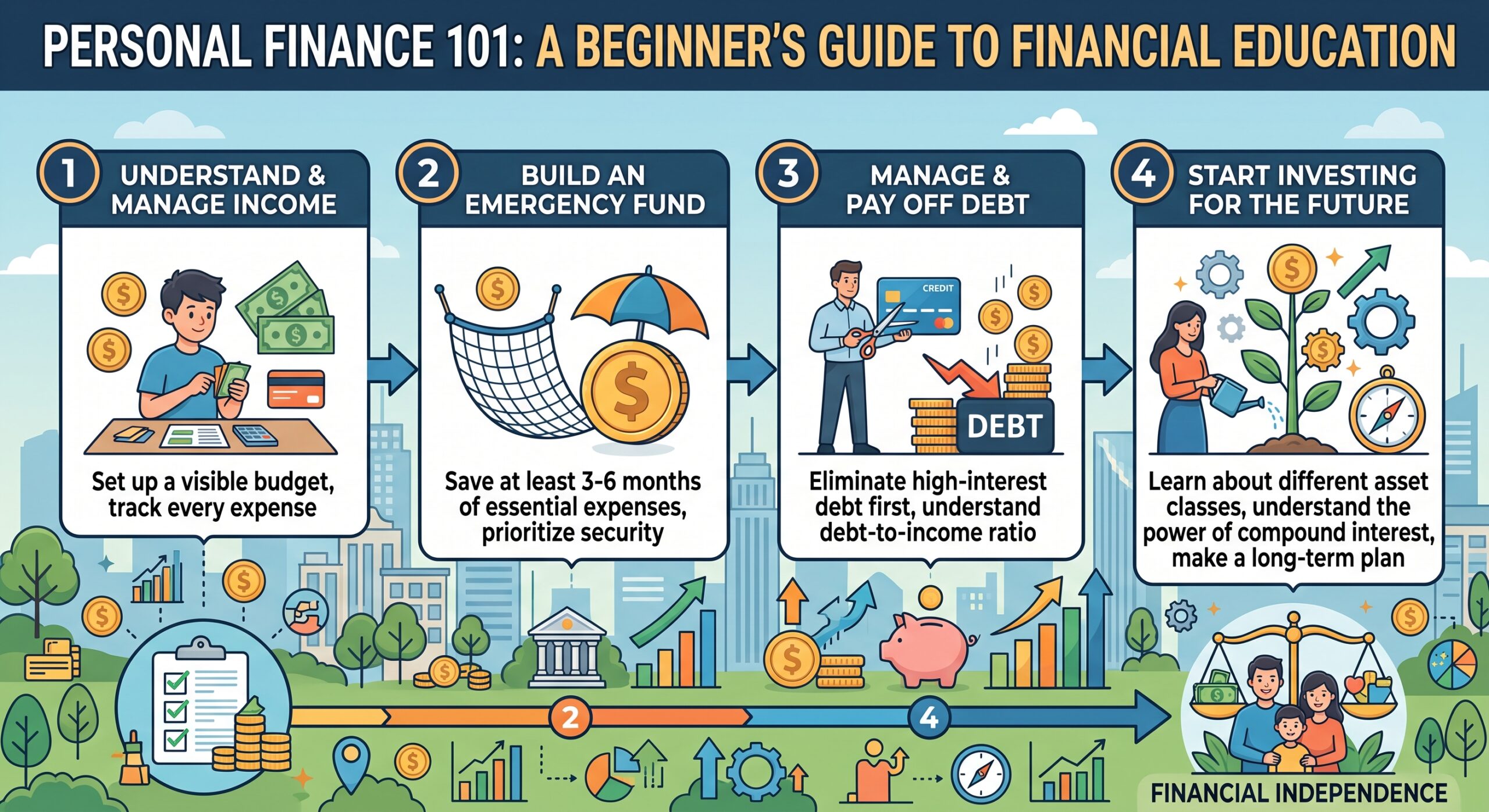
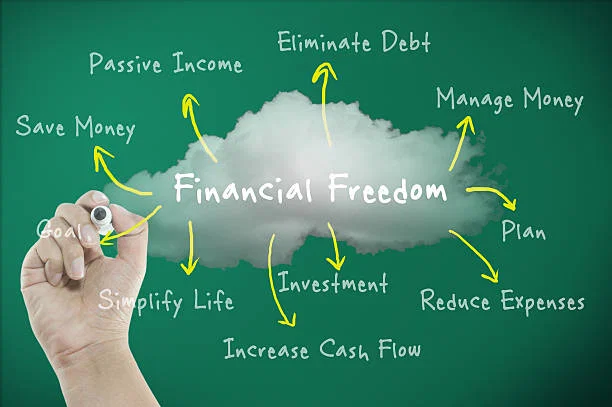
The concept of financial independence has evolved from a distant retirement dream into an actionable lifestyle strategy for millions worldwide. At its core, achieving financial independence means reaching a point where your personal wealth generates enough income to cover your living expenses without the absolute necessity of traditional full-time employment.
While the goal is straightforward, the path requires a strategic balancing act between two distinct economic engines: optimizing your active income and deploying that capital into productive investments. Understanding how these two forces interact is the definitive key to building long-term, sustainable wealth.
1. The Foundation: Maximizing Active Income
Every investment strategy requires fuel, and that fuel is capital. For most individuals, the primary source of initial capital is active income—money earned from a primary job, freelancing, or running a business.
To accelerate the journey to financial independence, relying solely on standard annual raises is rarely enough. Instead, top wealth-builders focus on two primary levers:
- Upskilling and Career Architecture: Continuously acquiring high-value skills (such as data analysis, cybersecurity, or advanced corporate valuation techniques) directly translates to higher market value.
- The Power of Side Hustles: Diversifying your income streams through consulting, digital content management, or e-commerce reduces reliance on a single employer. Crucially, it provides a secondary stream of revenue that can be 100% dedicated to investments, leaving your primary salary to cover living expenses.
However, increasing your income is only half the battle. The true catalyst for wealth accumulation is avoiding “lifestyle inflation”—the tendency to spend more as you earn more. Keeping your living expenses relatively stable while your income climbs creates a widening surplus, which is the exact dollar amount available for wealth creation.
2. Transitioning from Earned Income to Passive Income
The ultimate goal of financial independence is to shift your financial reliance from earned income to passive income. Passive income requires minimal daily effort to maintain, allowing your money to work for you rather than you working for your money.
To understand this transition, it is helpful to visualize how cash flows move through different stages of financial growth:
[ Active Income ] ──> [ The Investment Engine ] ──> [ Passive Income ]
     (Salary)            (Stocks, ETFs, Real Estate)     (Dividends, Interest)
The investment engine takes your surplus cash and converts it into assets that continuously produce cash flow. Over time, the passive income generated by these assets begins to compound, eventually overtaking your monthly baseline expenses.
3. Core Investment Vehicles for Long-Term Wealth
Building a resilient investment portfolio requires choosing assets that match your risk tolerance, time horizon, and financial goals. For those targeting financial independence, three foundational asset classes dominate the landscape:
U.S. Equities and Broad-Market ETFs
For building long-term capital, the stock market remains one of the most accessible and historically reliable wealth generators. Specifically, exchange-traded funds (ETFs) that track major indexes, such as the S&P 500, provide instant diversification across hundreds of the world’s most profitable companies.
Broad-market ETFs are highly favored in financial independence strategies because they offer low expense ratios and eliminate the risk of picking individual stocks that might underperform. Historically, the U.S. stock market has delivered an average annual return of roughly 10% before inflation, making it an ideal environment for long-term compounding.
Dividend-Growth Investing
While index funds provide excellent overall market exposure, dividend-growth investing focuses specifically on companies that regularly distribute a portion of their earnings back to shareholders. By reinvesting these dividends during your accumulation phase, you buy more shares, which in turn generate even more dividends. When you finally reach financial independence, you can stop reinvesting and use those cash payouts to fund your daily life.
Real Estate and Alternative Assets
Real estate offers a tangible alternative to paper assets, providing steady rental income alongside potential property appreciation. For those who prefer a hands-off approach, Real Estate Investment Trusts (REITs) offer a way to invest in large-scale commercial property portfolios directly through the stock market, combining real estate exposure with high liquidity.
4. The Mathematics of Independence: Compounding and the 4% Rule
Achieving financial freedom isn’t a vague feeling; it is a calculated milestone. Two mathematical principles guide this journey: compound interest and the Safe Withdrawal Rate (SWR).
The Phenomenon of Compounding
Compound interest is often described as earning interest on your interest. In the early years of investing, your contributions do the heavy lifting. However, over a decade or two, the returns generated by your investments begin to outpace the amount of money you actively put in.
Determining Your “Financial Independence Number”
To figure out how large your investment portfolio needs to be, financial planners frequently point to the 4% Rule, derived from the landmark Trinity Study. The rule suggests that a retiree can safely withdraw 4% of their total investment portfolio in the first year of retirement, and adjust that amount for inflation every year after, with an incredibly high probability that the money will last at least 30 years.
To calculate your target portfolio size, you can invert this rule by multiplying your annual living expenses by 25.
The FI Equation:
$$\text{Target Portfolio} = \text{Annual Living Expenses} \times 25$$
For example, if your baseline annual expenses are $40,000, your financial independence number is $1,000,000. Once your portfolio reaches that threshold, it is statistically capable of providing your required income sustainably.
5. Risk Management and Portfolio Protection
No financial strategy is complete without a robust defense. Markets move in cycles, and economic downturns are inevitable. Protecting your wealth requires a disciplined approach to risk management:
- Asset Allocation: Ensuring your money is split appropriately between equities for growth and fixed-income assets (like bonds or high-yield savings accounts) for stability.
- Emergency Funds: Maintaining 3 to 6 months of living expenses in cash ensures you never have to sell your investments at a loss during a market correction just to pay for an unexpected bill.
- Cybersecurity and Asset Protection: In a digital economy, safeguarding your financial identity is just as important as choosing the right investments. Utilizing strong security protocols, multi-factor authentication, and monitoring your financial accounts protects your hard-earned capital from fraud and identity theft.
Conclusion: Designing Your Financial Future
Financial independence is not an all-or-nothing milestone achieved overnight. It is a spectrum of increasing freedom. As your investment income grows, your financial stress decreases, giving you the leverage to make career choices based on fulfillment rather than financial survival.
By focusing on maximizing your active income streams, aggressively avoiding lifestyle inflation, and consistently channeling your surplus into diversified, income-producing investments, you build an economic engine that eventually runs entirely on its own. The keys to financial independence are discipline, time, and a commitment to letting your money work for you.