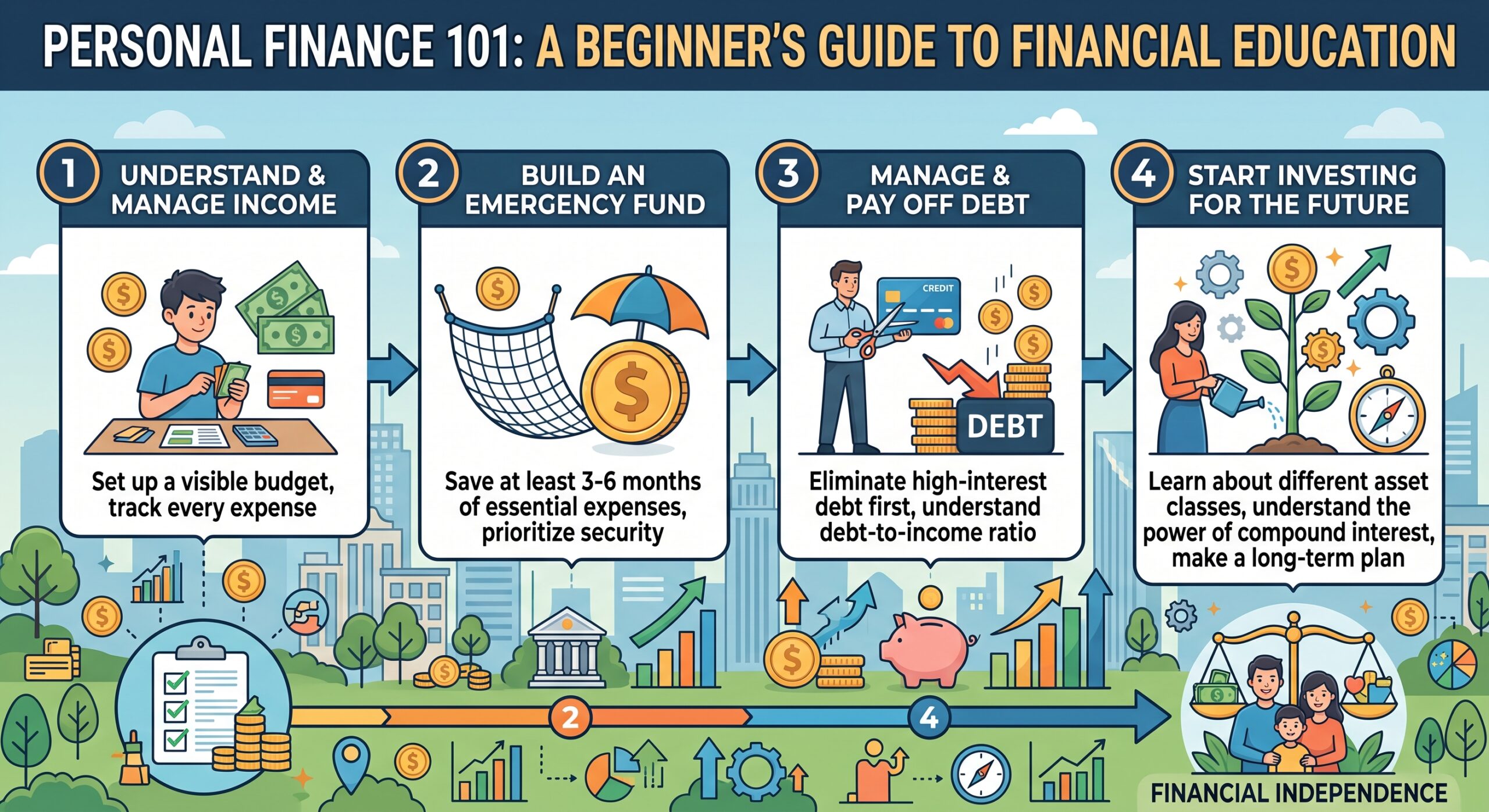

When most people think about building wealth, they picture high-stakes stock trading, fast-paced real estate flipping, or betting early on volatile cryptocurrencies. While these high-risk, high-reward strategies dominate headlines, they aren’t the only path to financial freedom. In fact, for a large portion of investors, the stress and potential for devastating losses make high-risk strategies entirely unappealing.
Building wealth does not require you to gamble your hard-earned money. By leveraging the power of low-risk investments, consistency, and time, you can construct a robust financial foundation that grows steadily while allowing you to sleep soundly at night.
Here is a comprehensive guide on how to safely navigate the world of low-risk investing and use it to build long-term wealth.
Understanding the Risk-Reward Trade-Off
Before diving into specific investment vehicles, it is crucial to understand the fundamental law of finance: the risk-reward trade-off. Generally, the higher the potential return of an investment, the higher the risk of losing your principal.
Low-risk investments flip this script. They prioritize the preservation of capital over explosive growth. While you won’t see 100% returns overnight, you also won’t wake up to find half of your portfolio wiped out by a market crash. Wealth building here relies on the magic of compound interest—where your money earns interest, and then that interest earns interest, creating a snowball effect over time.
The Best Low-Risk Investment Vehicles for Wealth Building
To build wealth safely, you need to know where to put your money. Here are the most reliable, low-risk investment options available today:
1. High-Yield Savings Accounts (HYSAs)
Traditional brick-and-mortar banks offer dismal interest rates on standard savings accounts, often failing to keep up with inflation. High-Yield Savings Accounts, typically offered by online banks, provide significantly higher interest rates while maintaining the exact same level of safety.
- Safety Net: In the United States, HYSAs are backed by the FDIC (Federal Deposit Insurance Corporation) for up to $250,000 per depositor, per institution.
- Best Used For: Emergency funds and short-term financial goals.
2. Certificates of Deposit (CDs)
A Certificate of Deposit is a contract between you and a bank. You agree to leave a specific amount of money untouched for a set period (ranging from a few months to several years), and in exchange, the bank guarantees a fixed interest rate.
- The Catch: If you withdraw your money before the maturity date, you will face an early withdrawal penalty.
- Wealth Strategy: Use a CD Ladder. By opening multiple CDs that mature at different times (e.g., 1-year, 2-year, 3-year), you ensure regular access to cash while locking in higher, long-term rates.
3. Treasury Securities (Bills, Notes, and Bonds)
Issued by the federal government, U.S. Treasury securities are widely considered the safest investments on earth because they are backed by the “full faith and credit” of the government.
- Treasury Bills (T-Bills): Short-term investments maturing in one year or less, sold at a discount and redeemed at full face value.
- Treasury Notes and Bonds: Longer-term investments that pay fixed interest every six months.
- Series I Savings Bonds (I Bonds): Specifically designed to protect your purchasing power, these bonds have an interest rate tied directly to inflation.
4. Money Market Funds
Not to be confused with money market accounts at a bank, Money Market Funds are mutual funds that invest in high-quality, short-term debt instruments, such as cash, government securities, and commercial paper. They aim to maintain a stable net asset value (NAV) of $1 per share while paying out dividends.
5. Dividend-Paying Blue-Chip Stocks
While stocks are inherently riskier than bank accounts or government bonds, blue-chip stocks represent established, financially sound corporations with a history of stable earnings and reliable dividend payouts.
- The Strategy: Reinvesting these dividends through a DRIP (Dividend Reinvestment Plan) allows you to acquire more shares automatically, accelerating your wealth accumulation without risking money on speculative growth stocks.
Comparing Low-Risk Investment Options
| Investment Type | Risk Level | Liquidity | Ideal For |
|---|---|---|---|
| High-Yield Savings (HYSA) | Extremely Low | Very High | Emergency Funds, Short-term Savings |
| Certificates of Deposit (CD) | Extremely Low | Low (Penalties apply) | Fixed Timelines (e.g., buying a house in 2 years) |
| U.S. Treasury Securities | Virtually Zero | Medium | Long-term Capital Preservation |
| Money Market Funds | Low | High | Holding cash while earning modest returns |
| Blue-Chip Dividend Stocks | Moderate | High | Long-term Wealth Growth & Inflation Shield |
Core Strategies for Building Wealth Safely
Simply putting money into a low-risk account isn’t enough to build true wealth; you need a strategic approach.
Automate and Invest Consistently
Wealth building is a marathon, not a sprint. The most effective way to grow your portfolio is through Dollar-Cost Averaging (DCA). By setting up automatic transfers from your paycheck into your chosen investment vehicles every month, you remove emotion from the equation. You buy fewer assets when prices are high and more when prices are low.
Beat Inflation with Smart Allocation
The biggest enemy of low-risk investing is inflation. If your investments earn 3% interest but inflation is running at 4%, you are technically losing purchasing power. To combat this, a wealth-building portfolio should never rely on just one asset.
Even a conservative investor should consider a balanced asset allocation, such as:
- 70% Low-Risk Assets: Cash, HYSAs, Short-term Treasuries.
- 30% Low-Volatility Growth Assets: Index funds tracking the S&P 500 or dividend aristocrat ETFs.
This hybrid approach protects your principal while ensuring your wealth grows faster than the cost of living.
Pro-Tip on Taxes: Maximize tax-advantaged accounts like IRAs or 401(k)s. Minimizing the amount of tax you pay on interest and dividends leaves more money in your account to compound over time.
The Psychological Advantage of Low-Risk Investing
One often overlooked benefit of low-risk investing is the psychological peace of mind it provides. High-risk investing frequently leads to emotional decision-making—selling in a panic during a market downturn or buying out of FOMO (Fear of Missing Out) at market peaks.
Low-risk investors benefit from consistency. Because the daily fluctuations of your portfolio are minimal, you are far less likely to make rash financial decisions driven by panic or greed.
Conclusion: The Slow and Steady Path to Success
Building wealth with low-risk investments requires patience, discipline, and a shift in mindset. It rejects the fantasy of overnight riches in favor of a mathematically proven, reliable strategy.
By utilizing a combination of high-yield savings, government securities, and stable income-generating assets, you protect yourself from catastrophic market failures. Over time, the relentless engine of compound interest will turn your disciplined savings into substantial wealth. Remember: it is not about how fast you get rich, but how well you protect and grow what you have earned.