
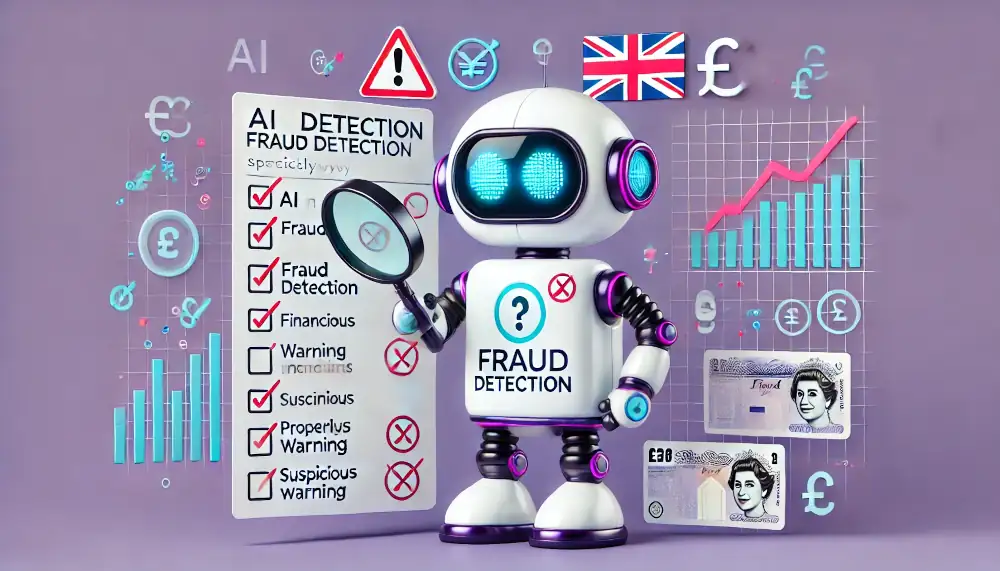
In an era where digital transactions are the lifeblood of the global economy, the sophistication of financial crimes has reached unprecedented levels. As businesses and financial institutions migrate more services to the cloud, they inadvertently expand the “attack surface” for cybercriminals. To combat this, the industry has shifted from reactive, rule-based systems to proactive, AI-driven fraud detection technologies.
This article explores the evolution of fraud detection, the mechanics of modern AI solutions, and how organizations can implement these tools to safeguard assets while remaining compliant with global standards.
The Evolution of Fraud Detection: From Rules to Intelligence
Historically, fraud detection relied on Legacy Rule-Based Systems. These systems operated on a set of “if-then” statements created by human analysts. For example, if a transaction exceeded $10,000 or occurred in a high-risk geographic location, it was flagged for manual review.
While effective in a simpler digital landscape, rule-based systems have several critical flaws:
- High False Positives: Legitimate customers often find their transactions blocked because they don’t fit a narrow profile.
- Inflexibility: Criminals quickly learn the rules and find ways to bypass them.
- Scalability Issues: As transaction volumes grow, manual review becomes a bottleneck, leading to poor customer experiences.
Modern Artificial Intelligence (AI) and Machine Learning (ML) solutions solve these issues by analyzing vast datasets in real-time to identify patterns that no human could perceive.
Key Technologies in Modern Fraud Prevention
The “tech stack” for fraud prevention is now a multi-layered ecosystem. Here are the core components driving the industry today:
1. Machine Learning (Supervised and Unsupervised)
Machine Learning is the engine of modern fraud detection.
- Supervised Learning: Algorithms are trained on historical data labeled as “fraud” or “legitimate.” The AI learns the characteristics of past attacks to recognize similar future attempts.
- Unsupervised Learning: This is crucial for detecting “Zero-Day” fraud. The AI looks for anomalies or outliers in behavior without needing prior examples. If a user who typically spends $50 on groceries suddenly attempts to buy $5,000 worth of electronics in a different city, the system flags the anomaly.
2. Behavioral Biometrics
Beyond passwords and PINs, AI now analyzes how a user interacts with a device. This includes:
- Keystroke dynamics (typing speed and rhythm).
- Mouse movements and scroll patterns.
- How a mobile device is held (angle and pressure). If a bot or a fraudster tries to use stolen credentials, their behavioral “fingerprint” won’t match the legitimate user, triggering an alert.
3. Predictive Analytics and Big Data
AI solutions ingest massive amounts of structured and unstructured data—including IP addresses, device IDs, geolocation, and social media footprints. Predictive models assign a “Fraud Score” to every transaction. Transactions with low scores are processed instantly, while high scores require multi-factor authentication (MFA) or human intervention.
Common Fraud Types Addressed by AI
AI solutions are particularly adept at fighting specific, high-frequency fraud types:
- Account Takeover (ATO): By monitoring login patterns and behavioral biometrics, AI detects when an unauthorized party has gained access to a user’s account.
- Phishing and Social Engineering: Natural Language Processing (NLP) can scan emails and messages for the linguistic markers of phishing attempts, blocking them before they reach the employee or consumer.
- Synthetic Identity Fraud: This occurs when fraudsters combine real and fake information to create a new “person.” AI can detect these “Frankenstein” identities by analyzing the lack of a traditional financial history or inconsistent data points across different databases.
Strategic Implementation for Businesses
For businesses looking to integrate AI-driven fraud detection, the transition should be methodical.
Data Quality is King
The effectiveness of any AI model is dictated by the quality of the data it consumes. Organizations must ensure they are collecting clean, relevant data points across all customer touchpoints. This includes mobile apps, web portals, and physical point-of-sale systems.
The “Human-in-the-Loop” Model
While AI is powerful, it is not infallible. The most robust systems use a hybrid approach. AI handles the bulk of the data processing and clear-cut cases, while complex or borderline cases are escalated to human analysts. This feedback loop actually improves the AI, as human decisions are fed back into the model to refine its accuracy.
Balancing Security and Friction
A major challenge in fraud prevention is “Customer Friction.” If security measures are too intrusive, customers will abandon their shopping carts. AI enables “Silent Authentication,” where the majority of security checks happen in the background without requiring the user to take any action.
Compliance, Ethics, and Data Privacy
When implementing AI fraud solutions, businesses must navigate a complex regulatory environment, including GDPR (Europe), CCPA (California), and LGPD (Brazil).
- Explainability: Many regulations require that AI decisions be “explainable.” A bank cannot simply deny a loan or block an account without being able to explain why the AI made that choice. This has led to the rise of “Explainable AI” (XAI).
- Data Minimization: AI systems should only collect the data necessary for the specific task of fraud detection to remain compliant with privacy laws.
- Bias Prevention: AI models must be regularly audited to ensure they aren’t inadvertently discriminating against certain demographics based on biased historical data.
The Future: Deep Learning and Graph Networks
Looking ahead, two technologies are set to redefine the field:
- Deep Learning: Mimicking the human brain’s neural networks, deep learning can process even more complex data types, such as images and voice, to prevent identity theft.
- Graph Databases: These analyze the relationships between entities. If five different accounts are all linked to the same phone number or IP address, a graph network can visualize this “fraud ring” instantly, allowing for a proactive shutdown of the entire network.
Conclusion
The battle against digital fraud is an escalating arms race. As fraudsters adopt AI to automate their attacks, businesses must counter with even more sophisticated AI solutions. By moving away from rigid rules and embracing the fluid, predictive power of machine learning and behavioral biometrics, organizations can protect their revenue and, more importantly, the trust of their customers.
Investing in fraud detection technology is no longer just an IT expense; it is a fundamental pillar of corporate strategy and financial stability in the 21st century.