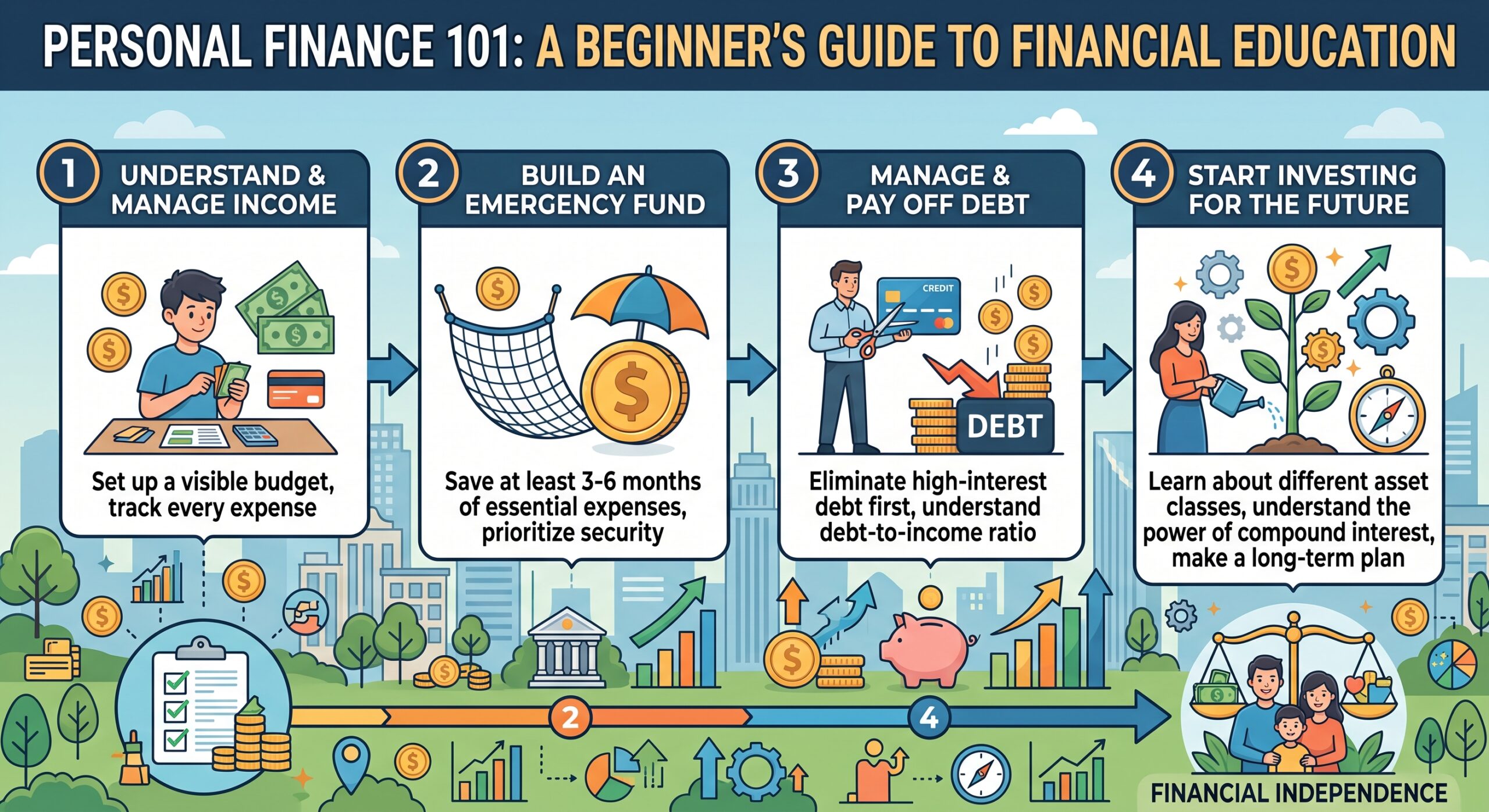

The concept of passive income has evolved significantly. It is no longer about finding “get-rich-quick” internet schemes; instead, modern financial sustainability relies on deploying capital into smart, structured, and resilient asset classes.
True passive income is the byproduct of strategic investing. By pairing cash flow generation with robust corporate valuation techniques and risk-mitigated structures, investors can build streams of revenue that outpace inflation and weather market volatility.
Below is an institutional-grade roadmap to passive income streams backed by sophisticated, modern investment strategies.
1. High-Yield Dividend Growth Investing
Dividend investing remains a foundational pillar of cash-flow generation. However, a “smart” approach avoids simply chasing the highest current yield, which is often a warning sign of a distressed company (a value trap). Instead, seasoned investors look for Dividend Growth.
The Corporate Valuation Strategy
To secure reliable passive income, analyze a company’s fundamental financial health using key metric-driven indicators:
- Payout Ratio: Ensure the company distributes less than 60% of its earnings as dividends. This guarantees they retain enough capital to reinvest in business growth.
- Free Cash Flow (FCF) Yield: Dividends are paid out of cash, not accounting net income. A consistently positive and growing FCF ensures the dividend is safe even during cyclical economic downturns.
- Moat Analysis: Focus on companies with competitive advantages—such as high switching costs, strong brand equity, or proprietary technology—allowing them to maintain pricing power against inflationary pressures.
By focusing on “Dividend Aristocrats” or “Dividend Kings” (companies that have increased their payouts consecutively for 25 and 50 years, respectively), your passive stream inherently compounds over time, shielding your purchasing power.
2. Low-Cost Broad-Market Index ETFs
For investors seeking maximum hands-off diversification, Exchange-Traded Funds (ETFs) tracking major indexes dominate the landscape. ETFs provide institutional diversification with minimal administrative friction.
Why Index ETFs Anchored to Major Benchmarks Dominate
Instead of attempting to time the market or pick individual winning stocks, passive index investing captures the structural growth of the entire economy. Funds tracking the S&P 500 or total world stock indexes automatically rebalance, shedding underperforming companies and increasing weight in rising corporate giants.
With total net assets in the global ETF market scaling past $14 trillion, the liquidity and micro-fractional expense ratios (often below 0.05% annually) mean nearly 100% of your capital goes directly to work. To turn this into consistent passive income, investors utilize two pathways:
- Distributing ETFs: Choosing fund variants that directly distribute quarterly dividends to your bank account.
- The Systematic Withdrawal Plan (SWP): Investing in accumulating funds and structurally selling a fixed, conservative percentage (e.g., 3% to 4% annually) to manufacture cash flow while preserving principal longevity.
3. Real Estate Investment Trusts (REITs) with a Factor-Tilt
Physical real estate offers excellent cash flow, but it demands active management, significant capital, and carries high transactional friction. Real Estate Investment Trusts (REITs) solve this by trading on public exchanges like stocks, legally requiring the underlying entity to distribute at least 90% of taxable income to shareholders.
Deploying a “Smart Beta” Factor Strategy
To maximize returns while minimizing risk, modern passive income investors avoid buying generic REIT indexes. Instead, they apply a Smart Beta or Factor-Tilt framework, sorting the REIT sector by specific structural attributes:
| REIT Sector | Modern Structural Catalyst | Risk Profile |
|---|---|---|
| Data Centers & Infrastructure | Fueled by global AI infrastructure and cloud computing expansion. | Medium / Low Volatility |
| Logistics & Warehousing | Anchored by complex supply chain networks and e-commerce distribution nodes. | Low / Highly Resilient |
| Healthcare & Medical Offices | Insulated from economic downturns due to demographic aging trends. | Defensive / Consistent |
By tilting your real estate allocation toward secular megatrends (like logistics and digital infrastructure) rather than struggling commercial office spaces, you construct a resilient real estate yield portfolio that requires zero property management.
4. Sustainability & ESG-Focused Fixed-Income Funds
Fixed-income markets have experienced a major structural shift. Higher macroeconomic interest rates have made bonds and corporate credit highly attractive vehicles for predictable income generation. Concurrently, capital allocations toward sustainable corporate strategies have surged.
The Rise of Green and Sustainability-Linked Bonds
Smart investors looking for fixed income are increasingly allocating capital to Environmental, Social, and Governance (ESG) focused alternative funds and green bonds. These vehicles function similarly to traditional debt instruments—paying regular coupon income—but the underlying capital is exclusively earmarked for eco-friendly infrastructure, clean energy innovations, or sustainable corporate transformations.
[Investor Capital] ──> [ESG/Green Bond Fund] ──> [Finances Clean Energy/Eco-Infra]
                                                               │
[Predictable Passive Yield] <── [Fixed Coupon Payments] ───────┘
Integrating quantitative ESG risk factors alongside traditional financial metrics allows investors to mitigate regulatory and climate-related operational risks. This dual-focus approach creates a highly stable, risk-adjusted yield curve ideal for conservative cash-flow generation.
5. Automated Covered Call and Option Income ETFs
For advanced investors seeking higher immediate yields than traditional equities offer, the evolution of financial engineering has democratized option income strategies through specialty ETFs.
Understanding the Mechanics of Derivative Income
These actively managed, rule-based ETFs buy an underlying portfolio of equities (such as the S&P 500 or Nasdaq-100) and systematically write (sell) covered calls against those positions.
- When the fund sells a call option, it collects an immediate cash premium from the buyer.
- This premium is packaged and distributed monthly to the ETF shareholders as passive income.
- The Trade-Off: This strategy caps the maximum capital appreciation of the underlying stocks during a rapid bull market, but it provides exceptionally high, steady income distribution in flat, choppy, or mildly declining market environments.
Risk Management: The Golden Rules of Passive Investing
To ensure your investment strategies remain viable long-term and fully compliant with sustainable financial planning, always implement these institutional guardrails:
The Passive Income Guardrails
- Diversification Across Asset Classes: Never rely on a single source of passive income. Balance your portfolio across dividend equities, fixed-income instruments, and real asset alternatives (REITs).
- Expense Ratio Auditing: High management fees silently erode compounding returns. Prioritize low-cost, systematically managed vehicles over high-fee active funds unless the fund demonstrates clear, structural alpha.
- Tax Drag Optimization: Understand how distributions (dividends vs. capital gains) are taxed in your specific jurisdiction. Utilize tax-advantaged accounts to shield your incoming cash flow where possible.
Conclusion
True passive income is not an alternative to hard work; it is the ultimate reward of disciplined capital allocation. By shifting your focus toward asset classes backed by corporate cash flows, structural economic growth, and modern sustainable trends, you transform your portfolio into an independent economic engine. Start small, focus on the fundamental health of your assets, and allow compounding execution to handle the rest.
Disclaimer: This article is for informational and educational purposes only and does not constitute formal financial, legal, or investment advice.