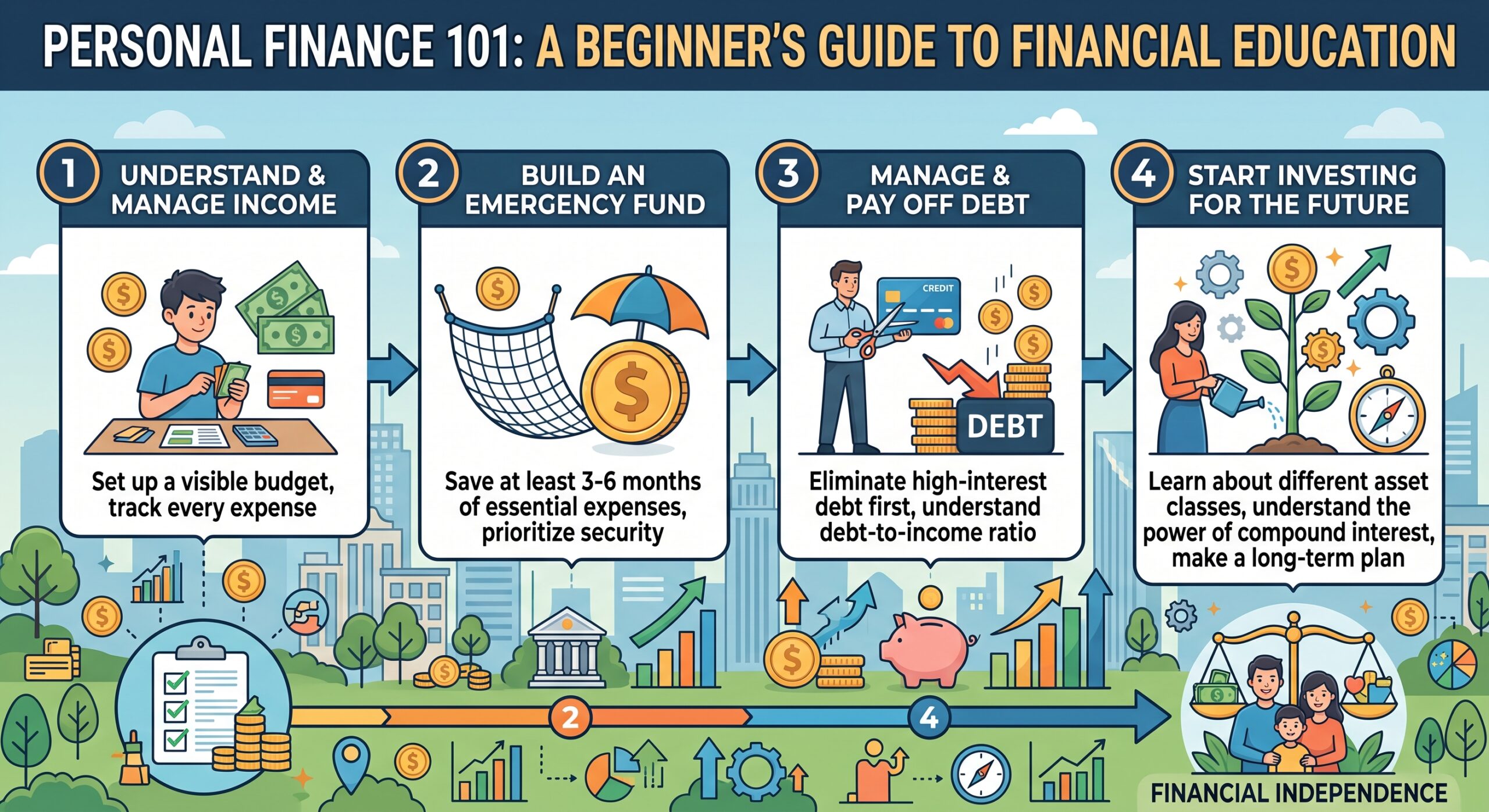

Many people view investing as a high-stakes game reserved for Wall Street professionals or individuals with vast amounts of capital. They imagine success relies on catching a lucky break, perfectly timing the market, or discovering a secret stock before anyone else. In reality, successful investing is rarely built on dramatic wins. Instead, it is the natural byproduct of boring, consistent, and disciplined financial habits.
Before you can build a high-performing investment portfolio, you must establish a personal financial ecosystem that can support it. Here are the core financial habits that separate successful investors from the rest, and how you can implement them to achieve your long-term financial goals.
1. Mastering the Shift from Saving to Automated Asset Accumulation
The bedrock of investing is capital creation. You cannot invest money you have already spent. However, traditional saving—simply letting cash sit in a low-interest bank account—is actually a losing strategy over time due to the corrosive effects of inflation. Successful investors view saving not as the end goal, but as the raw material for purchasing income-generating assets.
The most effective way to cultivate this habit is through automation. Instead of waiting until the end of the month to invest whatever happens to be left over, you should adopt the “Pay Yourself First” mentality.
- Actionable Step: Set up an automatic transfer on your payday that routes a specific percentage of your income (e.g., 10%,15%, or 20%) directly into your brokerage or investment account.
By automating this process, you remove decision fatigue and emotional hesitation from the equation. The money is invested before you even have a chance to miss it.
2. Guarding Capital: Maintaining a True Emergency Fund
It might seem counterintuitive to include cash reserves in a guide about investing, but an emergency fund is your portfolio’s greatest shield. Market volatility is inevitable. If you do not have a liquid cash cushion, a sudden life event—such as a medical emergency, car breakdown, or temporary job loss—can force you to liquidate your investments prematurely.
Selling assets during a market downturn to cover short-term expenses converts temporary paper losses into permanent, realized financial damage.
The General Rule: Maintain 3 to 6 months’ worth of living expenses in a high-yield savings account (HYSA). This cash should remain entirely separate from your investing capital, ensuring that your long-term portfolio remains untouched regardless of what life throws your way.
3. Practicing Strategic Diversification and Low-Cost Investing
Trying to pick individual winning stocks requires significant time, deep corporate governance research, and a high tolerance for risk. For the vast majority of investors, the most reliable habit is to rely on broad-market index funds and Exchange-Traded Funds (ETFs).
Successful investing habits favor minimizing costs and maximizing diversification. High management fees (expense ratios) can quietly erode your returns over decades. A difference of just 1% in annual fees can cost an investor tens of thousands of dollars over a 30-year horizon.
| Investment Type | Typical Fee Range | Diversification Level | Ideal For |
|---|---|---|---|
| Broad Market Index Funds / ETFs | 0.03%−0.10% | Very High (Tracks hundreds of companies) | Long-term wealth accumulation |
| Actively Managed Mutual Funds | 0.50%−1.50%+ | Moderate to High (Dependent on manager) | Niche sectors or specific strategies |
By making a habit of choosing low-cost, passively managed index funds that track major indices (like the S&P 500 or Total Stock Market indexes), you inherently spread your risk across multiple sectors, protecting yourself from the failure of any single corporation.
4. Harnessing the Power of Dollar-Cost Averaging (DCA)
Market timing is a trap that snares both novice and experienced investors alike. Trying to guess when the market has hit its absolute bottom or peak is statistically a losing game. Successful investors replace market timing with Dollar-Cost Averaging (DCA).
DCA is the habit of investing a fixed amount of money at regular intervals (e.g., $500 every month), regardless of whether the market is up, down, or moving sideways.
- When prices are high: Your fixed dollar amount buys fewer shares.
- When prices drop: Your fixed dollar amount automatically buys more shares at a discount.
Over time, this strategy lowers your average cost per share and eliminates the psychological anxiety of trying to “time” your entry points perfectly. It turns market volatility into an advantage.
5. Cultivating Emotional Discipline and a Long-Term Horizon
The stock market is a mechanism designed to transfer wealth from the impatient to the patient. Yet, human psychology is wired for immediate gratification and panic when threats arise. When the headlines turn negative and the market dips, the temptation to panic-sell can be overwhelming.
Developing an “investing temperament” is arguably more important than understanding complex macroeconomics. This means shifting your perspective from daily price fluctuations to multi-year horizons.
Historical data shows that while the stock market can be wildly unpredictable over days or months, its long-term trajectory over decades has consistently trended upward. Review your portfolio performance quarterly or annually rather than checking it multiple times a day. Less looking usually leads to less tinkering, which leads to better returns.
6. Continuous Financial Literacy and Risk Rebalancing
The financial landscape is dynamic. Tax laws evolve, economic cycles shift, and your personal risk tolerance will naturally change as you age. A crucial habit of successful investors is committing to continuous, high-quality financial education and routine portfolio maintenance.
Portfolio rebalancing is the practice of adjusting the weightings of your asset classes. If your target portfolio is 80% stocks and 20% bonds, a strong year in the stock market might push your allocation to 88% stocks and 12% bonds. This leaves you overexposed to risk.
- The Habit: Once or twice a year, review your asset allocation. Sell a portion of the overperforming assets and buy more of the underperforming ones to bring your portfolio back to your target balance. This forces you to inherently follow the golden rule of investing: sell high, buy low.
Conclusion: The Compounding Effect of Habits
Successful investing is not defined by a single, brilliant financial maneuver. It is the result of compounding—not just the compounding of your money, but the compounding of your daily choices.
By automating your contributions, protecting your capital with an emergency fund, staying diversified, and maintaining emotional neutrality during market shifts, you build an unshakeable foundation for wealth. Stop looking for financial shortcuts. Instead, focus on mastering these habits, trust the process, and let time do the heavy lifting for your future security.