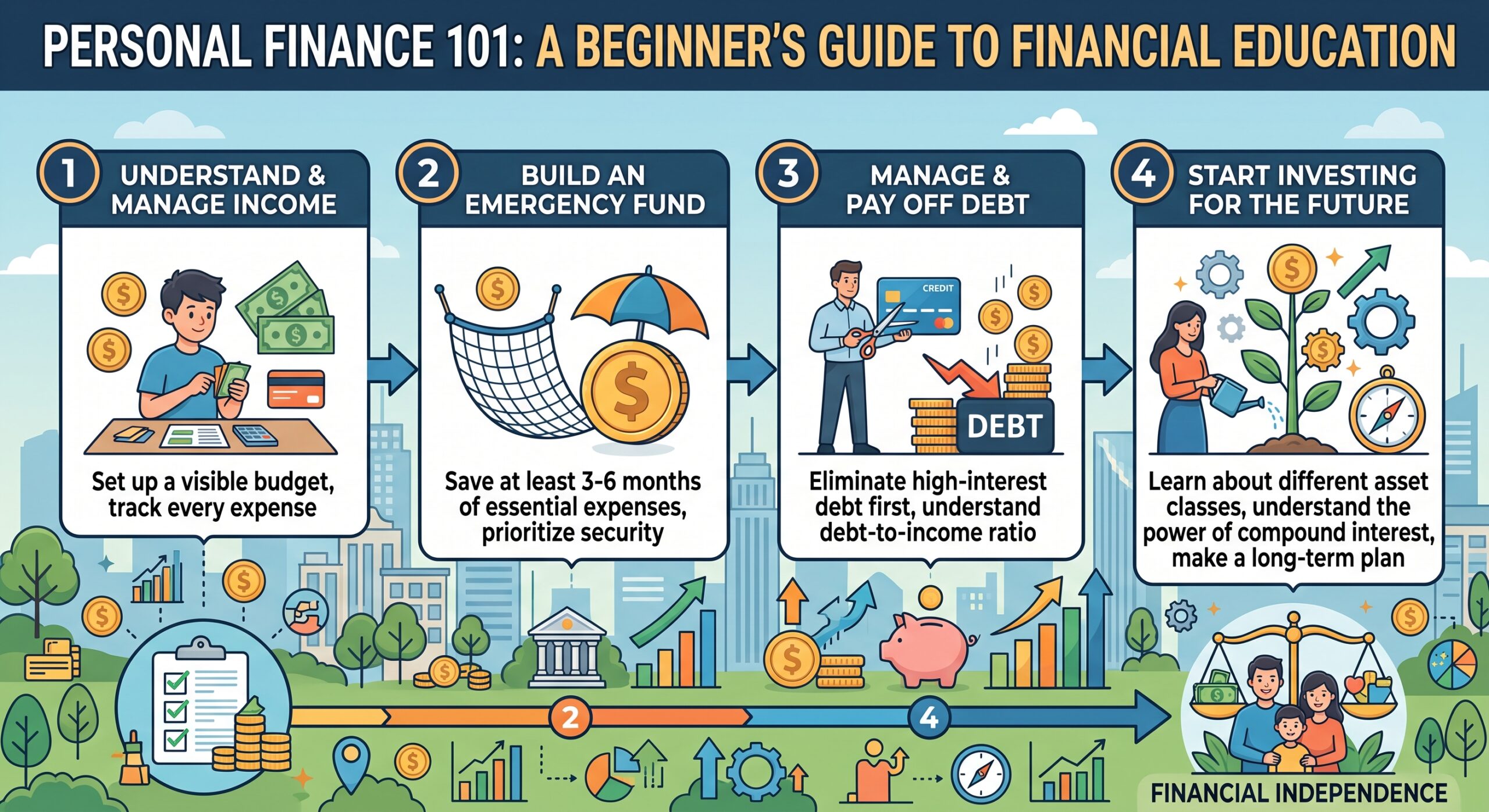

Navigating the world of business is often compared to sailing: you can have the most majestic ship (your product) and the most skilled crew (your employees), but without a reliable compass and a sturdy hull, you’re at the mercy of the elements. In the corporate world, that hull is your financial foundation, and the compass is your financial planning.
Effective business finance planning is not just about keeping the lights on; it’s about creating a scalable, resilient structure that can weather economic downturns and capitalize on sudden opportunities.
1. The Core Pillars of Financial Planning
To build a foundation that lasts, you must move beyond simple bookkeeping. Financial planning is a strategic exercise that aligns your company’s operational goals with its monetary resources.
A. Strategic Budgeting
A budget is more than a list of expenses; it is a mathematical expression of your business priorities.
- Zero-Based Budgeting: Instead of carrying over last year’s figures, start from scratch each period to justify every dollar spent.
- The 50/30/20 Rule for Business: While often used for personal finance, businesses can adapt this by allocating 50% to operations, 30% to growth/R&D, and 20% to debt reduction or cash reserves.
B. Cash Flow Management
Profit is a matter of opinion; cash is a matter of fact. Many profitable businesses fail because their capital is tied up in inventory or unpaid invoices while bills come due.
- Burn Rate: Know exactly how much cash you consume each month.
- Operating Cycle: Minimize the time between spending money on raw materials and receiving cash from customers.
2. Capital Structure: Debt vs. Equity
How you fund your foundation determines your level of control and risk. Finding the right balance in your capital structure is essential for long-term health.
| Funding Type | Pros | Cons |
| Debt (Loans) | Maintain full ownership; interest is tax-deductible. | Requires regular repayment regardless of revenue. |
| Equity (Investors) | No repayment obligation; brings in expertise. | Dilutes ownership and profit sharing. |
| Bootstrapping | Total independence; forces lean operations. | Slower growth due to limited capital. |
3. Financial Forecasting and Projections
Forecasting is the “weather report” of your business. It allows you to anticipate “dry spells” and prepare for “harvest seasons.”
Revenue Projections
Use historical data combined with market analysis to predict future sales. It’s wise to create three scenarios:
- Optimistic: The “best-case” where marketing hits perfectly.
- Conservative: The “realistic” middle ground.
- Pessimistic: The “survival” mode if a major client leaves or the market dips.
Expense Forecasting
Fixed costs (rent, salaries) are easy to predict, but variable costs (shipping, raw materials) require closer monitoring. Don’t forget to factor in inflation, which can silently erode your margins over time.
4. Risk Management and Contingency Planning
A strong foundation is built to withstand shocks. This is where Risk Management comes into play. You cannot avoid risk, but you can certainly mitigate it.
- Emergency Funds: Ideally, a business should hold 3 to 6 months of operating expenses in highly liquid accounts.
- Insurance: From general liability to cyber-insurance, protecting your assets against “Black Swan” events is non-negotiable.
- Diversification: Avoid “Key Person” risk or “Single Client” risk. If 80% of your revenue comes from one source, your foundation is on shaky ground.
5. The Role of Technology in Modern Finance
In 2026, relying on manual spreadsheets is a recipe for error. Financial planning is now driven by FinTech and AI-driven analytics.
- Cloud Accounting: Tools like QuickBooks or Xero provide real-time visibility into your accounts from anywhere.
- ERP Systems: Enterprise Resource Planning software integrates finance with supply chain and HR, ensuring that every department is working with the same financial data.
- Automated Reporting: AI can now flag anomalies in spending or predict cash flow shortages before they happen, allowing for proactive rather than reactive management.
6. Tax Efficiency and Compliance
It’s not just about how much you make, but how much you keep. Tax planning should be a year-round activity, not a year-end scramble.
Note: Understanding the difference between tax evasion (illegal) and tax avoidance (using legal methods to minimize tax liability) is crucial for any business owner.
Effective strategies include:
- Maximizing Deductions: Everything from home office expenses to employee benefits.
- Tax Credits: Many governments offer incentives for R&D or “Green” energy initiatives.
- Structure Choice: Whether you are an LLC, S-Corp, or C-Corp significantly impacts your tax burden.
7. Measuring Success: Key Performance Indicators (KPIs)
To know if your foundation is holding, you need to monitor specific metrics. If you can’t measure it, you can’t manage it.
- Net Profit Margin: $\frac{\text{Net Income}}{\text{Revenue}} \times 100$. This tells you how much of every dollar earned actually stays in your pocket.
- Current Ratio: $\frac{\text{Current Assets}}{\text{Current Liabilities}}$. A ratio above 1.0 suggests you can cover your short-term debts.
- Accounts Receivable Turnover: Measures how quickly you collect payments from customers.
- ROI (Return on Investment): $\frac{\text{Net Profit}}{\text{Cost of Investment}}$. Crucial for deciding where to allocate future capital.
Conclusion: The Living Plan
Financial planning is not a “one and done” document that sits in a drawer. It is a living, breathing strategy. As market conditions shift and your business evolves, your financial foundation must be inspected and reinforced.
By balancing aggressive growth with conservative risk management, and leveraging modern technology with timeless accounting principles, you ensure that your business doesn’t just survive—it thrives. A strong financial foundation provides the freedom to innovate, the courage to expand, and the peace of mind to lead.