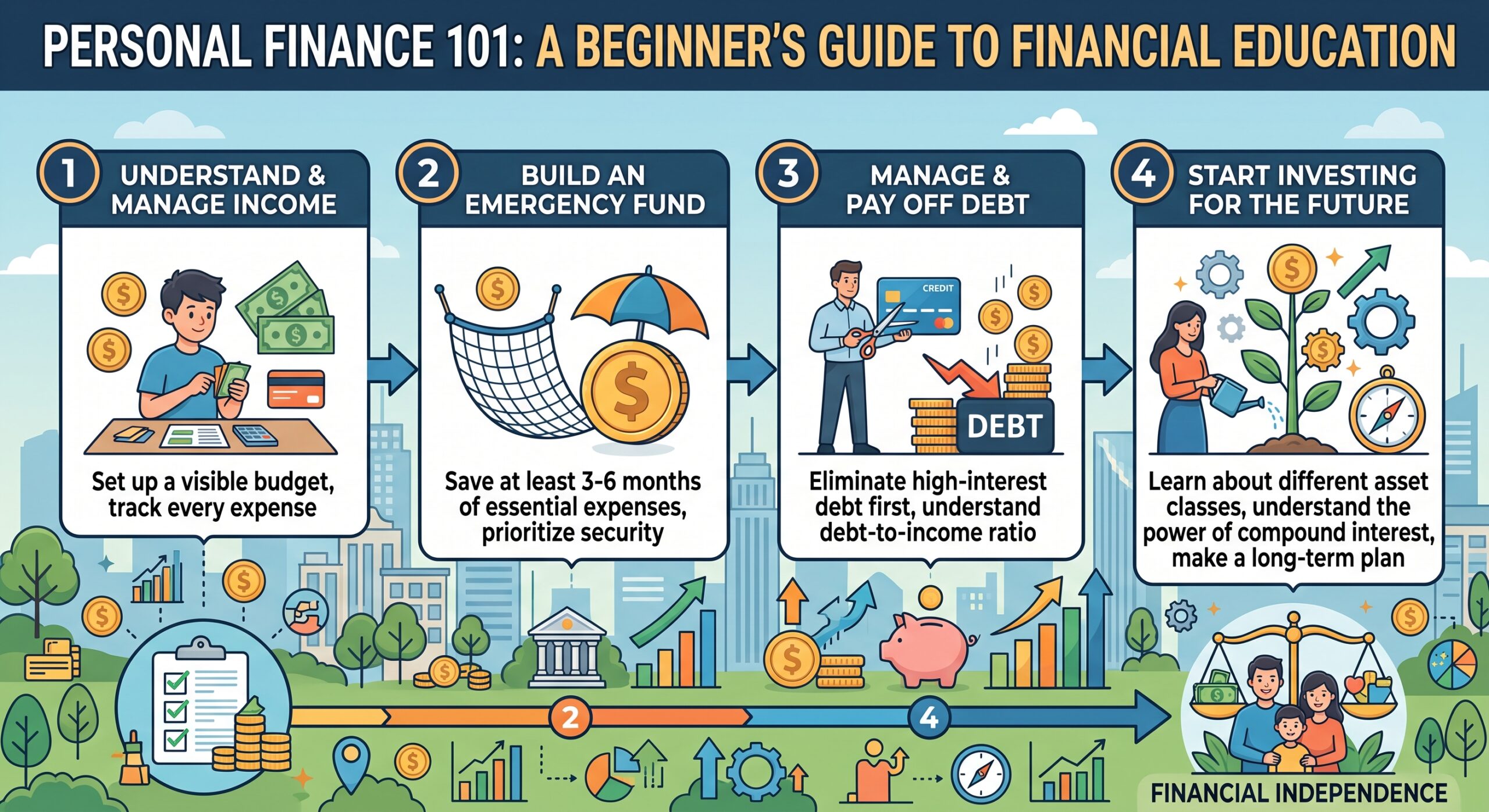

In the vast and often turbulent ocean of personal finance, an emergency fund is not a luxury—it is the indispensable lifeboat that keeps your financial journey afloat. It’s the foundational cornerstone upon which genuine financial security is built. Without this essential reserve, the most meticulously planned budget or the most aggressive investment strategy stands vulnerable to the unpredictable squalls of life.
This detailed guide explores why an emergency fund is the first, most critical step toward financial stability, how to calculate its ideal size, and the practical steps to build and maintain this crucial safety net.
What Exactly is an Emergency Fund?
Simply put, an emergency fund is a pool of readily accessible cash designated exclusively for unforeseen financial emergencies. It is not for planned expenses like a down payment on a house, a vacation, or holiday shopping.
Examples of True Emergencies:
- Job Loss/Reduction in Income: This is the most common and often most devastating emergency.
- Medical Bills: Unexpected illness, injury, or major dental work.
- Major Home Repairs: A burst pipe, a broken furnace, or a leaking roof.
- Car Troubles: Necessary repairs that are essential for commuting to work.
- Unforeseen Travel: Urgent, unplanned travel due to a family crisis.
The fund’s core purpose is to prevent these crises from derailing your long-term financial goals and, critically, to keep you out of high-interest debt.
🛡️ The Protective Shield: Why It Matters
The importance of an emergency fund extends far beyond simply having cash on hand. It provides a powerful psychological and financial buffer.
1. The Debt Prevention Mechanism
When a true emergency strikes and you don’t have savings, the default, and often most damaging, solution is to reach for credit cards, personal loans, or even dipping into retirement accounts.
- Credit Cards: Charging a $5,000 emergency expense to a credit card with an 18% Annual Percentage Rate (APR) turns a one-time crisis into a long-term, expensive debt trap.
- 401(k) or IRA Withdrawals: Taking money out of a retirement account before age 59.5 often triggers steep penalties and ordinary income taxes, devastating your future compounding growth.
An emergency fund allows you to pay for the crisis in cash, keeping your debt load low and your long-term goals intact.
2. The Power of Financial Resilience (The “Stress Test”)
Consider two individuals, both earning $60,000 per year.
- Person A (No Fund): Loses their job. They immediately panic, take the first low-paying job offered, and max out a credit card to cover rent and groceries. Their decision-making is driven by fear and urgency.
- Person B (Six-Month Fund): Loses their job. They have six months of expenses saved. This gives them the emotional and financial breathing room to conduct a patient, focused job search, negotiate a better salary, and avoid taking on new debt. Their decision-making is driven by opportunity and logic.
The emergency fund is the difference between a crisis that leads to ruin and a hurdle that leads to a better future.
3. Protecting Your Investments
Imagine a market downturn where your stock portfolio has dropped 20%. Simultaneously, your car breaks down and needs $3,000 in repairs. Without an emergency fund, you would be forced to sell your investments at a loss to cover the repair. This is known as “selling low”—the exact opposite of a sound investment strategy. Your emergency fund acts as a protective firewall, isolating your investment portfolio from your immediate cash needs.
📏 How Much is Enough? Calculating Your Target
The ideal size of an emergency fund is not a one-size-fits-all number. It depends on your household’s financial stability and risk profile. The standard recommendation is to save enough to cover three to six months of essential living expenses.
Step 1: Calculate Your Essential Monthly Expenses (E.M.E.)
This step requires a disciplined, realistic look at your budget. E.M.E. includes costs you must pay to survive, not wants.
| Essential Expense | Exclude (for the purpose of E.M.E.) |
| Rent/Mortgage | Dining out/Takeout |
| Groceries | Entertainment (streaming services, movies) |
| Utilities (electric, water, gas, internet) | Gym memberships (if non-essential) |
| Minimum Debt Payments | Luxury items |
| Insurance Premiums (health, car, home) | Excessive shopping |
| Transportation Costs | Saving for vacation or retirement |
Example: If your combined essential monthly expenses (E.M.E.) total $4,000, your minimum emergency fund target is:
- 3 Months Target: $\$4,000 \times 3 = \$12,000$
- 6 Months Target: $\$4,000 \times 6 = \$24,000$
Step 2: Determine Your Risk Profile
While three to six months is the general rule, your personal situation dictates whether you should aim for the lower or upper end of the spectrum (or even more).
| Aim for 3 Months (Lower Risk) | Aim for 6+ Months (Higher Risk) |
| Stable, secure job (e.g., tenured government position) | Commission-based or contract work (variable income) |
| Dual-income household | Single-income household |
| Low debt-to-income ratio | High debt load or student loans |
| Low-cost-of-living area | High-cost-of-living area |
| Excellent health insurance coverage | Pre-existing medical conditions |
🛠️ The Implementation: Where to Keep the Money
The location of your emergency fund is critical. It must satisfy two opposing requirements: Accessibility and Safety/Liquidity.
NEVER put your emergency fund in a volatile investment like the stock market. The moment you need the cash, the market could be down, forcing you to withdraw less than you need.
The best places to house your emergency fund are liquid, federally insured accounts:
- High-Yield Savings Accounts (HYSAs): These are the gold standard. They are FDIC-insured, offer easy, quick access, and pay a significantly higher interest rate than a standard brick-and-mortar checking account. This allows your money to grow slightly while retaining liquidity.
- Money Market Accounts (MMAs): Similar to HYSAs but may offer check-writing privileges. They are also FDIC-insured.
- Short-Term Certificates of Deposit (CDs): Some investors use a “laddering” strategy where they split the fund into multiple short-term CDs (e.g., 3-month, 6-month, 12-month) to get slightly better rates. However, this reduces immediate liquidity and is best for funds that exceed the 6-month minimum.
Crucial Note on Accessibility: The money should be stored in an account separate from your main checking account. This separation creates a necessary psychological barrier, making it less tempting to dip into the funds for non-emergencies.
🎯 Building the Fund: Practical Strategies
Building a several-thousand-dollar fund can feel daunting, but a systematic approach makes it manageable.
- Start Small: The $1,000 Starter Fund: Before attacking high-interest debt (excluding mortgage), focus on saving a quick $1,000. This “starter” fund acts as your very first buffer, preventing small emergencies (like a minor car repair) from forcing you to incur new debt immediately.
- Treat It Like a Bill (Automate): Set up an automatic monthly transfer from your checking account to your emergency fund account on payday. Treat this transfer with the same urgency as your rent or mortgage payment. If you don’t see it, you won’t spend it.
- Use Windfalls Strategically: Direct any unexpected money—tax refunds, work bonuses, or gifts—directly into the fund until you hit your target. These windfalls can dramatically shorten the timeline.
- Cut Non-Essentials Temporarily: To accelerate the process, temporarily reduce discretionary spending (eating out, subscriptions) and dedicate the savings entirely to the fund.
🔄 Maintenance: The Forgotten Step
Once your fund is fully funded, you are not done. An emergency fund requires maintenance:
- Replenish: If you use the fund for a true emergency, your immediate financial priority must be to replenish it back to its target size.
- Re-evaluate: Once a year, review your essential expenses. Has your rent increased? Have you moved to a higher-cost area? Adjust your fund’s target size accordingly.
Financial security is a marathon, not a sprint, and it begins with the discipline of saving cash. By prioritizing and building a robust emergency fund, you are choosing financial freedom, protecting your long-term wealth, and ensuring that life’s inevitable setbacks remain minor inconveniences rather than catastrophic financial disasters.